

-
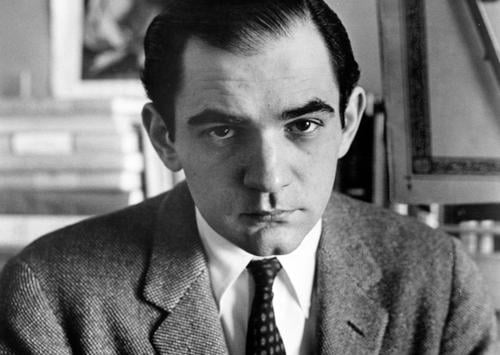
Bill Russo discusses his commedia dell'arte production
Jul. 26, 1974 Bill Russo talks about the commedia dell'arte production being staged at the Center for New Music at Columbia College Chicago. The production includes two pieces, "Pedrolino's Revenge" and "Isabella's Fortune".
-

Bernadette Devlin McAliskey discusses the lack of civil rights in Northern Ireland
The government, explains Bernadette Devlin McAliskey, is to blame for the slums they've built and for not providing proper housing. McAliskey contends there are no Black or white problems but rather that the slums and ghettos exist in the first place.
-
August Derleth discusses the books he writes ; part 1
To date, August Derleth said he's written 135 books. A good number of his books are of Sauk City, Wisconsin, the German town where is was born and raised. Derleth explained writing books on poetry are not big money makers and for that reason, he then turns to writing horror stories or mystery novels.
-
August Derleth discusses his writing influences ; part 2 | In the 2nd interview, Iris Ford discusses and demonstrates playing the sleigh bells
In conclusion, August Derleth, spoke of his biggest influences, Henry David Thoreau and Ralph Waldo Emerson. Derleth believed that one day there would be a renaissance of great literary authors. With regards to playing the sleigh bells in churches, Iris Ford says its like blending something ridiculous to the sublime. Ford, a self-taught sleigh bell player, plays for all types of religious orders. Because playing the music is for God, says Ford, it needs to be exceptional.
-
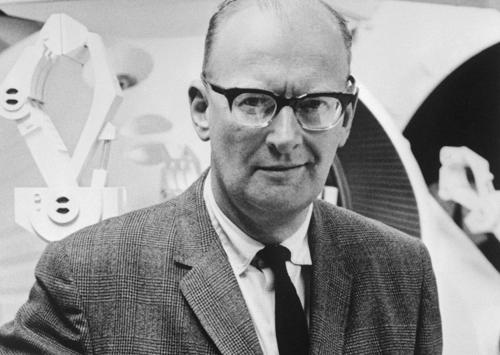
Arthur Charles Clarke discusses science fiction
Jan. 27, 1959 Arthur Charles Clarke discusses science fiction and his books "Childhood's End", "Prelude to Space", and "the Deep Range".
-
Anthony Davis discusses his opera "X The Life and Times of Malcolm X: an Opera in Three Acts"
Nov. 9, 1992 Composer and Pulitzer Prize winner for music Anthony Davis discusses his latest work focusing on the topic of the life and assassination of Malcolm X.
-
Anne Guerrero discussing urban renewal ; part 1
1968 Anne Guerrero discusses urban renewal and the difference between her neighborhood in a conservation area and a suburban neighborhood. She discusses how the area is changing and how the University of Illinois has affected her neighborhood. This recording ends abruptly and is part 1 of 3
-
Anne Guerrero discussing event in her life ; part 2
1968 Anne Guerrero discusses the impact her divorce has had on her younger children. She also discusses her own career and her future plans as well as her connection to the Roman Catholic Church. This recording ends abruptly and is part 2 of 3.
-
Anne Guerrero discusses religion ; part 3
1968 Anne Guerrero discusses religion in the Roman Catholic Church and her children. Her children participate in this interview and sing "Henry the Eighth." Part 3 of 3.
-
Ann Banks in conversation with Studs Terkel
Feb. 2, 1981 The journalist, writer, and editor discusses her book, First Person America, which documents over 80 oral histories from the time of the Federal Writers' Project, which was part of the Works Progress Administration.*Please note: some sections have been edited out from the original recording due to copyright considerations
-
An interview with Tom Kochman
Dec. 16, 1982 The author and communications professor offers some insight into his book Black and White Styles in Conflict. This program includes clips from recordings of a Black preacher's sermon and a white attendee of the 1963 March on Washington.*Please note: some sections have been edited out from the original recording due to copyright considerations
-
An interview with Stanley Kunitz
Nov. 19, 1978 The American poet describes a lonely childhood that was made bearable by his discovery of literature and how the discipline of reading and writing has sustained him throughout his long career.*Please note: some sections have been edited out from the original recording due to copyright considerations
-
An interview with Rosemary Daniell
Apr. 25, 1980 The feminist poet and author reflects on the life of her mother, as described in the memoir, Fatal Flowers: On Sin, Sex, and Suicide in the Deep South.*Please note: some sections have been edited out from the original recording due to copyright considerations
-
An interview with Rosalynn Carter
May. 3, 1984 The former First Lady reflects on her childhood in Georgia and her time at the White House in her book, First Lady from Plains.*Please note: some sections have been edited out from the original recording due to copyright considerations
-
An interview with Rogers E.M. Whitaker
Nov. 19, 1974 Discussing the book, All Aboard with E. M. Frimbo: World's Greatest Railroad Buff, published in 1974. Whitaker is critical of changes in rail services and public transportation.*Please note: some sections have been edited out from the original recording due to copyright considerations