

-

Interview with Glenn Ohrlin
Oct. 23, 1965 The cowboy singer and poet entertains Studs with tales of his childhood in Minnesota and his days on the road in California and Nevada.*Please note: some sections have been edited out from the original recording due to copyright considerations
-
Interview with Gabriel Fielding
1969 The English novelist began his writing career after having established a medical practice in Kent. Here, he discusses his time in the Royal Army Medical Corps as well as his careers in medicine, literature, and academia.*Please note: some sections have been edited out from the original recording due to copyright considerations
-
Interview with Evelyn Lear
Nov. 2, 1966 The American soprano sits down with Studs before her Chicago debut as Poppea in Monteverdi's Coronation of Poppea at the Lyric Opera.*Please note: some sections have been edited out from the original recording due to copyright considerations
-
Interview with Edith Mason
1959 Soprano Edith Mason and Studs reminisce about the golden days of Chicago opera.*Please note: some sections have been edited out from the original recording due to copyright considerations
-
Interview with Eamon Kelly
Jan. 26, 1967 The Irish actor and playwright joins Studs to discuss his role in "Philadelphia, Here I Come!" at the Shubert Theatre.*Please note: some sections have been edited out from the original recording due to copyright considerations
-
Interview with Dr. Herbert Zipper
Mar. 15, 1982 The Austrian-American conductor and longtime director of the Winnetka School of Music shares with Studs some of the musical discoveries he made while on a recent trip to China as educator and arts advocate.*Please note: some sections have been edited out from the original recording due to copyright considerations
-
Interview with Doctor X AKA Dr. Alan Nourse
Jul. 16, 1965 Discussing Intern by Doctor X, the candid journal written by Dr. Alan Nourse, who published under a pen name to protect his identity.
-
Interview with Bertrand Russell and Phyllis Evans Part 2
1962 Interviewing Bertrand Russell and Phyllis Evans while Studs was in England.
-
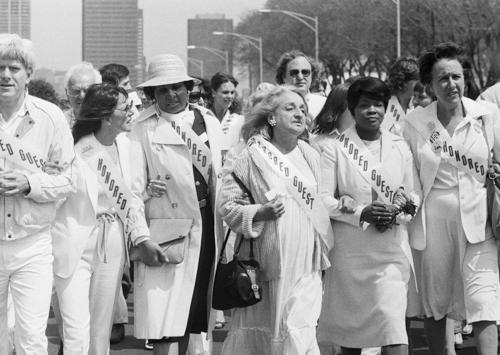
Illinois state representative Susan Catania, Clara Day and Marguerite Klimkowski discuss the Equal Rights Amendment (ERA)
Nov. 1, 1978 Discussing the Equal Rights Amendment with Illinois Representative Susan Catania and political activists Clara Day and Margaret Klimkowski.
-
Hugh Tracey discusses world music and dance
Nov. 16, 1960 *Please note: some sections have been edited out from the original recording due to copyright considerations
-
Horst Voight discusses his background and his future ; part 2
Horst Voight reflects on the bad job he believes teachers are doing by solely glossing over current history and only saying, "Hitler was a bad man". Voight believed those over 18 know they lost the war and they must pay the price for their fathers' involvement and mistakes of the war. Voight concluded with his love of journalism and how he hopes to be a great reporter, by getting both sides of every story.
-
Horst Voight discusses his background ; part 1
Horst Voight was only eight months old when his father died. Voight looked into and studied letters that his father had written because he wanted to understand how his father could be a soldier and align himself with Adolf Hitler.
-
Hope Cooke reads from and discusses her book, Time Change
Mar. 12, 1981 The American-born socialite experienced tragedy early in life after her mother was killed in a plane crash. She and her sister were then abandoned by their father and raised by aloof grandparents and a series of nannies. Later, she studied and traveled in Iran and India, married the last Chogyal (King) of Sikkim (northeast India), and wrote an autobiography.*Please note: some sections have been edited out from the original recording due to copyright considerations
-
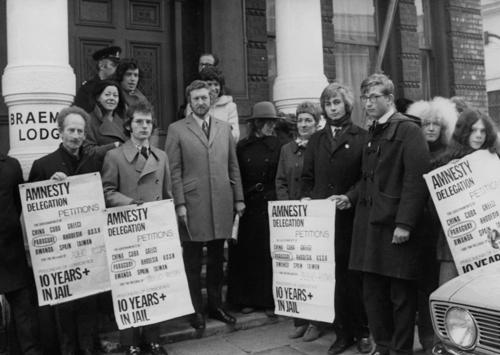
Helmut Frenz discusses Amnesty International
Sep. 22, 1980 Discussing Amnesty International with Helmut Frenz.
-
Harold Clurman discusses the theatre and his book "The Fervent Years"
Mar. 20, 1978 Being both a theatre critic and a theatre director prompted Harold Clurman to write his book, "The Fervent Years: The Group Theatre and the 30's". Clurman hopes that with every play a viewer sees, he or she then takes that material and ponders the message. Clurman explained that plays were a way to communicate truth about life.