

-

St. Clair Drake and Paul Mundy discuss prejudice ; part 4
1965 Discussing prejudice in communities with Dr. St. Clair Drake and Dr. Paul Mundy. They discuss discrimination, racism, integration, and other similiar topics.
-
St. Clair Drake and Paul Mundy discuss prejudice ; part 3
1965 Discussing prejudice in communities with Dr. St. Clair Drake and Dr. Paul Mundy. They discuss stereotypes, racism, and race relations.
-
St. Clair Drake and Paul Mundy discuss prejudice ; part 2.
1965 Discussing prejudice in communities with Dr. St. Clair Drake and Dr. Paul Mundy. They discuss prejudice towards the races, religions, and ethnicities of people.
-
St. Clair Drake and Paul Mundy discuss prejudice ; part 1
1965 Discussing the community and prejudice with Dr. St. Clair Drake and Dr. Paul Mundy. Includes an interview with a boy named Tony discussing relations with African American people.Content Warning: This conversation includes racially and/or culturally derogatory language and/or negative depictions of Black and Indigenous people of color, women, and LGBTQI+ individuals. Rather than remove this content, we present it in the context of twentieth-century social history to acknowledge and learn from its impact and to inspire awareness and discussion.
-
Spiet Himmelsturb discusses the little school movement
1968 Spiet Himmelsturb, a school teacher, talks about the little school where he works. Parents, teachers and students all have a say in how the school is run. Eighty percent of a teacher's salary is paid by the Danish government. Himmelsturb explains that no grades are given in the school. A walking tour of the school transpires seeing the children knit and weave and play jazz instruments. [part 2 is missing].
-
Soviet intellectuals discuss Soviet arts and culture
May. 28, 1962 Soviet intellectuals Tamara Mamedova, Nicolai Pogodin, and Anatol Safronov talk with Studs Terkel about their work with the Institute for Soviet-American Relations (U.S.) and Soviet arts and culture.
-

South African gold miners discuss their work
1963 Studs Terkel talks with Mr Law, the chief of the miners hospital, and the workers in the mine as he tours the gold mine. He he speaks to the miners about where they are from and talks with them about their jobs.
-

Sonny Rollins discusses his career
Oct. 16, 1978 Studs Terkel comments on baseball, baseball player Sam Crawford, comedian Spike Milligan, and interviews jazz musician Sonny Rollins. Includes a voice clip of baseball player Sam Crawford.
-
-
-
Son House discusses his life and career as a blues musician
Apr. 19, 1965 Son House discusses his life and career as a preacher and blues musician. He talks about his family, his religious background as a preacher, and his recent comeback after disappearing from music scene in 1943. He performs several songs during the interview, which have been removed due to copyright.
-
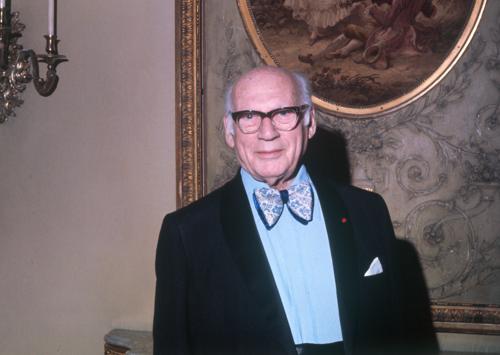
Sol Hurok discusses his career as an American impresario
May. 4, 1971 Sol Hurok discusses his work as an impresario, organizing events and bringing artists from around the world to the United States to perform. Studs Terkel plays songs by many of the artists and performers that Hurok has managed during the interview, including Feodor Chaliapin, Nellie Melba, Titta Ruffo, Luisa Tetrazzini, Sviatoslav Richter, Marian Anderson, and Arthur Rubinstein. Music has been removed from this version for copyright reasons.
-
Social workers discuss international youth welfare ; part 2
Jan. 9, 1965 Social workers discuss their work in youth welfare in various parts of the world including India, Germany, Peru, and Malaysia.
-
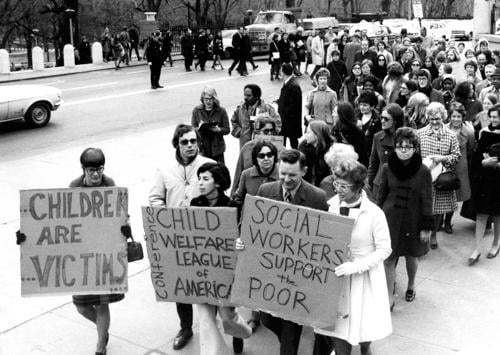
Social workers discuss international youth welfare ; part 1
Jan. 9, 1965 Social workers discuss their work in youth welfare in various parts of the world including India, Germany, Peru, and Malaysia.
-
Skip Kennon and David Rounds discuss the play "Herringbone"
Oct. 21, 1981 Skip Kennon wrote the music for "Herringbone", a one-man musical where all ten parts are played by the actor David Rounds. Madness, depression and schizophrenia are discussed as possible themes of the play.