

-

Dick Simpson discusses neighborhood government system
Mar. 1, 1979 Dick Simpson, alderman of Chicago, discusses neighborhood governments. He describes the history, explains the uses of wards, and shows how the system can work in light of a recent election in Chicago. Studs reads an article about the recent election by Mike Royko.
-
Dick Simpson discusses his book, Strategies for Change: How to Make the American Political Dream Work"
Sep. 27, 1976 Alderman Dick Simpson discusses his book, "Strategies for Change: How to Make the American Political Dream Work," and his work as the 44th Ward Alderman. He explains the assembly system that now runs the 44th Ward, where members are able to bind him to a vote if the majority decides. He also discusses how the assembly has already changed redlining, the school system, truck load limits, and high rise development within their neighborhood.
-
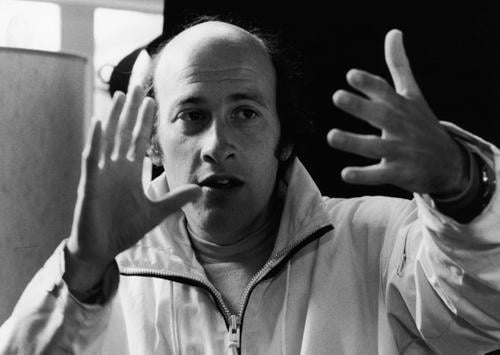
Dick Lester Impressions of London with Studs Terkel
Studs Terkel interviews film producer Dick Lester and receives Lester's impression of London.
-
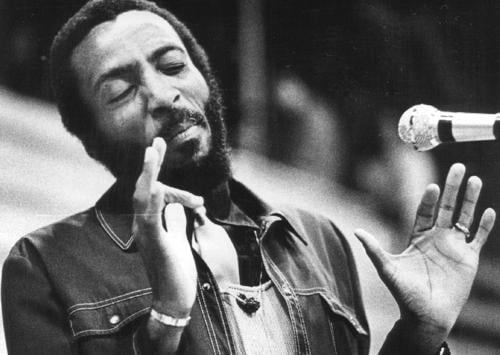
Dick Gregory discusses his career
May. 14, 1970 Lillian Smith excerpt opens the program.
-
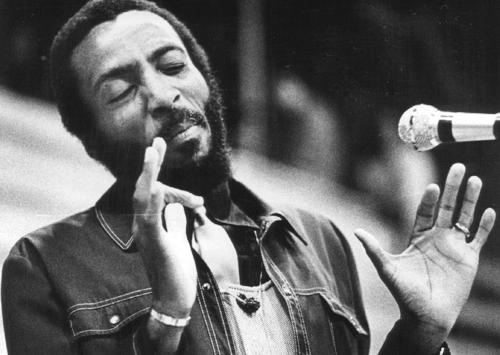
Dick Gregory discusses his book "Dick Gregory's Natural Diet for Folks Who Eat: Cookin' With Mother Nature"
May. 30, 1973 Comedian and activist Dick Gregory joins Studs Terkel to discuss his new book “Dick Gregory's Natural Diet for Folks Who Eat: Cookin' With Mother Nature.” Gregory talks about his experiences fasting for both political and health reasons, and he comments on hunger in America, the power of the navy bean, and changing trends in eating. The two discuss the peace movement and Watergate, and Gregory shares his experience as a black man in the military. Gregory believes that how you treat yourself and your body reflects how you treat others.
-
Dick Gregory discusses American politics
Dec. 17, 1964 This interview begins with a clip of one of Dick Gregory’s performances, where he talks about nonviolence and Native Americans. Studs Terkel introduces his guest as an observer, explaining that comedians are the best observers in society. Gregory offers extended analogies to communicate his views on a variety of topics, including the Vietnam War, race relations, segregation, human rights, and urban renewal. [The date is unclear, but it has to be after 1970, since the Kent State Shootings were mentioned]
-
Dick Cavett and Chris Porterfield discuss the book they wrote together, "Cavett"
Sep. 23, 1974 They discuss Mr. Cavett's life and his work as a talk show host. The interview ends with "Reverend Eli Jenkins' Prayer," a poem by Dylan Thomas sung by Osian Ellis, a Welsh singer, and harpist. These have been removed from the broadcast due to copyright.
-
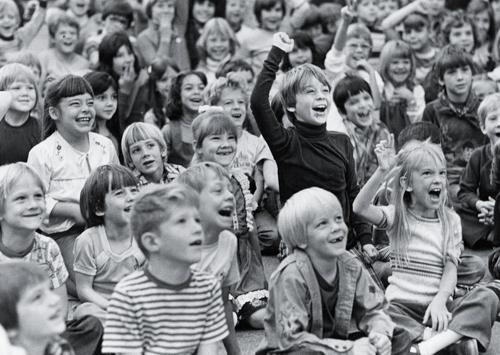
Diane Divorky discusses her book "The Myth of the Hyperactive Child: And Other Means of Child Control"
Oct. 24, 1975 Topics of discussion include privacy in education and access to school records, the use of pseudo-scientific terminology in describing children, the ways that a child's records are shared outside of the school and related race and class issues, the pharmaceutical industry and treatments, and the importance of parents refusing to allow their children to be given psychological tests without their informed consent.
-
Designer and instructor John E. Walley discusses design work
Apr. 22, 1959 Institute of Design instructor John E. Walley discusses teaching techniques and design trends.
-
Derrick Bell discusses his book "Confronting Authority"
Dec. 2, 1994 Civil rights activist, lawyer, and professor Derrick Bell discusses his latest work and protest against Harvard University due to their lack of diverse hiring in academics. Bell is known for his work on the concept of critical race theory and his relentless pursuit of fair treatment for his colleagues.
-
Derrick A. Bell in conversation with Studs Terkel
Oct. 8, 1992 Interviewing lawyer, activist and author Derrick Bell.
-
Derek Walcott discusses poetry and his play "Dream on Monkey Mountain"
Apr. 11, 1972 Colonial West Indies & Caribbean poet Derek Walcott talks about the traditions of poetry not purely being just the written words. Poetry, says Walcott, is also oral poetry that's found in folk songs, folk tales and calypso music. Walcott's play, "Dream on Monkey Mountain" is about Makak, an old hermit who lived on Monkey Mountain his whole life, and was now being kicked off the mountain.
-
Derek Shearer discusses his book "Economic Democracy"
Jun. 13, 1980 Studs Terkel speaks with writer and economist Derek Shearer about the book “Economic Democracy: The Challenge of the 1980s,” which Shearer co-authored with Martin Carnoy. Terkel and Shearer also discuss workers’ rights and equality in economics. Shearer reads a few excerpts from his book as well as a quote from labor leader Sidney Hillman.
-
Derek Freeman discusses the book "Margaret Mead and Samoa"
Mar. 15, 1983 Discussing the book "Margaret Mead and Samoa the making and unmaking of an anthropological myth" with the author Derek Freeman.
-
Derek Bell and Kevin Conneff of the Chieftains musical group discuss Irish folk music
Dec. 8, 1976 Interviewing Derek Bell and Kevin Conneff two members of the Chieftains musical group specializing in Irish folk music.