

-

Dr. Joseph Burkhalter and Dr. Charles Price talk with Studs about Pharmaceutical Chemistry ; part 2
1964 Studs has a conversation with Dr. Charles Price, American Chemical Society president and chairman of chemistry department at University of Pennsylvania and Dr. Joseph Burkhalter, Professor of pharmaceutical chemistry at University of Michigan, and chairman of American Chemical Society's division of medicinal chemistry. Dr. Price And Dr. Burkhardter discuss the drug industry and working with the government to develop pharmaceutical medicines. Both doctors voice the debate about creation of nuclear technology and how that impacted science in general.
-
Dr. Joseph Burkhalter and Dr. Charles Price talk with Studs about Pharmaceutical Chemistry ; part 1
1964 Studs has a conversation with Dr. Charles Price, American Chemical Society president and chairman of chemistry department at University of Pennsylvania and Dr. Joseph Burkhalter, Professor of pharmaceutical chemistry at University of Michigan, and chairman of American Chemical Society's division of medicinal chemistry. Dr. Price And Dr. Burkhardter discuss the drug industry and working with the government to develop pharmaceutical medicines. Both doctors voice the debate about creation of nuclear technology and how that impacted science in general. (part 1)
-
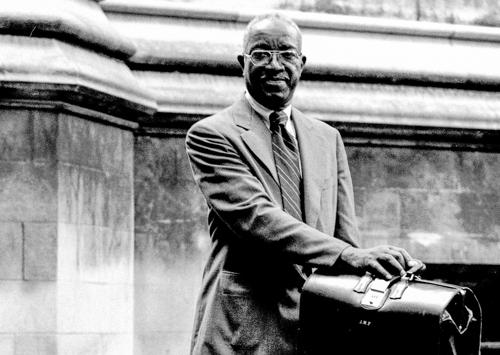
Dr. John Hope Franklin discusses the history of Civil War Reconstruction; part 1
1966 Dr. John Hope Franklin, professor of history at University of Chicago, outlines the history of reconstruction during the American Civil War and briefly his experience at the March to Montgomery; part 1.
-
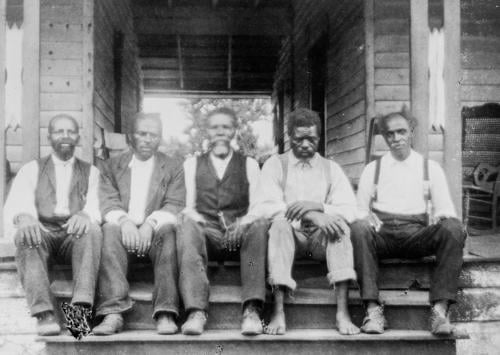
Dr. John Hope Franklin discusses reconstruction after the American Civil War; part 2
1966 Dr. John Hope Franklin, professor of history at University of Chicago, discusses the political history of reconstruction after the Civil War, along with which political decisions led to a power imbalance and the rise of the Ku Klux Klan in the southern states; part 2.
-
Dr. John Gedo discusses psychoanalysis
Sep. 22, 1981 Discussing psychoanalysis with Dr. John Gedo, former president of the Chicago Psychoanalytic Society.*Please note: some sections have been edited out from the original recording due to copyright considerations
-
Dr. John C. Lilly discusses his book "Center of the Cyclone"
Feb. 22, 1972 Discussing the book "Center of the Cyclone: An Autobiography of Inner Space" with the author Dr. John C. Lilly.*Please note: some sections have been edited out from the original recording due to copyright considerations
-
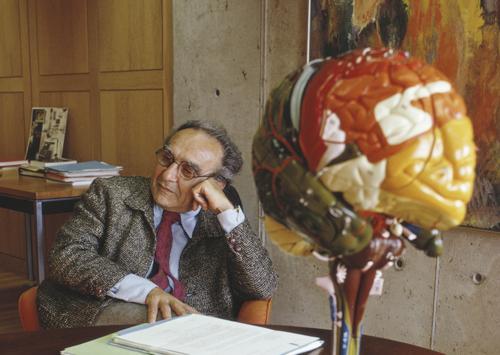
Dr. Jacob Bronowski discusses the philosophy of science in the post World War II world
Jan. 1, 1971 Dr. Jacob Bronowski, a mathematician and philosopher, discusses how the study of science has changed since the onset of government regulation or the military industrial complex. He also talks about humanity and explains how humans are the best species and therefore should come together to continue progress instead of killing each other. Content Warning: This conversation has the presence of outdated, biased, offensive language.
-
Dr. Herbert S. Terrace discusses his work in the field of primate cognition
Feb. 1980 Columbia University professor of psychology, Dr. Herbert Terrace, talks with Studs regarding his 1979 book "Nim: A Chimpanzee Who Learned Sign Language," animal cognition and the evolution of language.
-
Dr. Helen Caldicott discusses the ill-effects of a nuclear bomb going off
Apr. 7, 1981 The world spends 600 billon dollars on the arms race, which is rather puzzling to Dr. Helen Caldicott when 2/3 of the world's children are starving. Caldicott explained if a bomb went off in Chicago, there'd be a crater a half a mile wide and 300 feet deep. In addition, 90% of the people will be dead, some from being vaporized.
-
Dr. Harold Taylor sits down with Studs Terkel
May. 24, 1962 Educator and lecturer Harold Taylor discusses with Studs a variety of higher-education related topics, including being students being politically aware, on-campus activism and the role of instructors in students' lives.
-
Dr. George Wald discusses the have and the have nots of society
Oct. 12, 1974 Interviewing Dr. George Wald, Professor of Biology at Harvard University, who often spoke on the social aspects of science, human ecology, and the environment.
-
-
Dr. Erna Gunther and Allen Wardwell discuss the exhibition “Yakutat South Indian Art of the Northwest Coast”
Mar. 28, 1964 Professor of anthropology Dr. Erna Gunther and curator Allen Wardwell discuss the exhibition “Yakutat South Indian Art of the Northwest Coast” at the Art Institute of Chicago. The traditions and practices of the indigenous groups of the northwest coast of the United States are discussed.This conversation has the presence of outdated, biased, offensive language. Rather than remove this content, we present it in the context of twentieth-century social history to acknowledge and learn from its impact and to inspire awareness and discussion.
-
Dr. Erich Fromm discusses humanistic philosophy during the Cold War
1963 Dr. Erich Fromm explains how he believes the Cold War was a moment of change for humanity where it would either bring about a "renaissance of humanism or immense bloodshed and barbarism for decades to come." Using his study into humanism, Dr. Fromm warns about how the love of death can overtake the love of life as nationalism and group narcissism takes hold in different countries. He goes on to explain that humanity has to decide that they have a right to demand independence and freedom.
-
Dr. Emmett L. Avery and Dr. Arthur H. Scouten discuss the Restoration Comedy period of theater in England
1964 Drama historians and professors Dr. Emmett L. Avery of University of Washington and Dr. Arthur H. Scouten of University of Pennsylvania discuss the Restoration Comedy period of theater in England. The two served as editors of a twelve-volume collection that documents this period of theater in England. In this interview, the two discuss the cultural standards of the time, including how this period was when women were first allowed to be actors in productions. Studs plays "Concerto grosso in C Major, HWV 318 "Alexander's Feast": I. Allegro" - Philomusica of London (1960).