

-

Thich Nhat Hanh discusses poetry and Vietnam
Apr. 21, 1971 In an interview with Studs Terkel, Buddhist monk, peace activist, and poet Thich Nhat Hanh. The conversation focuses on the devastating effects of the Vietnam War; they discuss the loss of culture and poetry in Vietnam, the anti-war protestors in America and Vietnam, and the sadness and resignation of the Vietnamese. Thich Nhat Hanh talks about America’s role in the war, and his experiences campaigning for peace in the United States and speaking with U.S. anti-war veterans.
-
Theon Wright discusses his book "Rape in Paradise"
Nov. 2, 1966 Discussing the book "Rape in Hawaii" and interviewing the author Theon Wright.
-
Theodore Marmor discusses his book "The politics of Medicare"
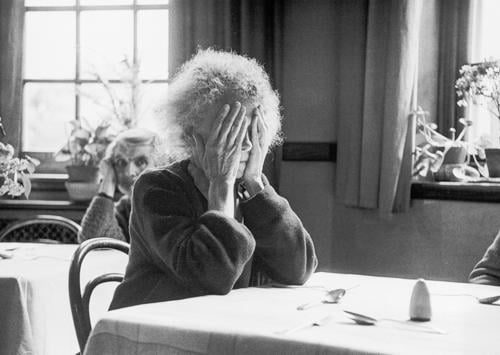
Nov. 5, 1974 Discussing the book, "The Politics of Medicare," and interviewing the author Theodore Marmor. Associate professor of Center of Health Administration studies at University of Chicago. Mr Marmor has been part of policy planning with the department of welfare, for medicare. He talks about National Healthcare or at the least affordable healthcare for all. He speaks of Medicare not covering all expenses specifically prescription drugs.
-
Theodore Bendoney, Tom Bendoney, and Mary Rosa Bendoney discuss being forced to relocate
Nov. 6, 1986 Discussing the relocation act of 1974 with three Navajo Elders, Theodore Bendoney, Tom Bendoney and Mary Rosa Bendoney. The land they live on now is Mother Earth to them. Ten to 15,000 Navajos must move because the government wants to strip mine the oil, gas, coal and uranium that's underneath the land.
-
The Walawa Basies talk with Studs Terkel ; part 2
Jan. 14, 1969 Studs Terkel interviews the members of the Walawa Basies: Kelvin Strong, Orlando Lucas, and Levon Campbell.
-
The Walawa Basies talk with Studs Terkel ; part 1
Jan. 14, 1969 Studs Terkel interviews the members of the Walawa Basies: Kelvin Strong, Orlando Lucas, Levon Campbell, and Justine Cordwell. This is an Interview done in two parts
-
The very "U" girl talks with Studs Terkel ; part 2
1962 Interviewing with the very "u" girl at the establishment (Part 2) while Studs was in England.
-
The very "U" girl talks with Studs Terkel ; part 1
1962 Interviewing with the very "Upper U" girl at the establishment (Part 1) while Studs was in England.
-
The Student Non-violent Coordinating Committee discusses the civil rights movement, protests, and jail with Studs Terkel
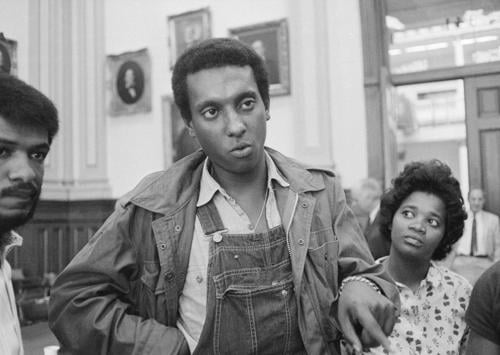
Sep. 1962 Terkel talks with Student Non-violent Coordinating Committee about the civil rights movement, protests, and jail.
-
The Lira Singers in conversation with Studs Terkel
Nov. 28, 1986 Terkel comments and presents a musical performance by The Lira Singers
-
The Flying Burrito Brothers discuss their album "The Gilded Palace of Sin"
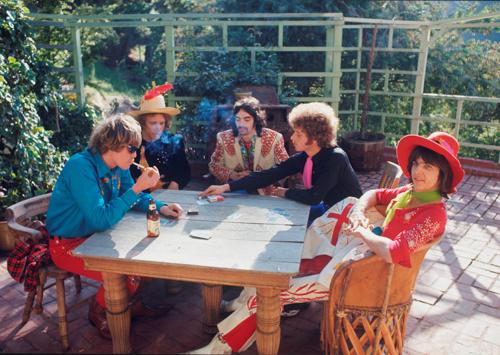
Mar. 1, 1969 This program presents the musical group the Flying Burrito Brothers and their album 'The Gilded Palace of Sin'. Studs Terkel interviews two of the band members, Chris Ethridge and Gram Parsons. The following topics discussed are: the artists' backgrounds; their musical perspective; their songwriting; Los Angeles; earthquakes; their early life; their lyrics; life in the south (America); and instrumentation. The following musical excerpts are presented: "Wheels"; "Sin City"; "My Uncle"; "Do You Know How It Feels"; and "Hippie Boy".
-
The Emerson String Quartet discuss the founding and successes of the group
Aug. 30, 1989 The Emerson String Quartet's members Eugene Drucker (violin), Lawrence Dutton (viola), David Finckel (violoncello), and Philip Setzer (violin) discuss their past work, scheduled performances, and musical techniques.
-
The Collier Family, Dr. Kawalak, and Augustine Stevens discuss Sierra Leone and the Peace Corps; part 1
Jul. 26, 1966 Discussing Sierra Leone, the Peace Corps, and interviewing the Collier Family, Dr. Kawalak, and Augustine Stevens. They also discuss the languages, culture, religion, and history of Sierra Leone. Includes clips of African music (from Sierra Leone).
-
The cast of Brendan Behan's "The Hostage" discusses their play and theatre at large
Feb. 26, 1961 Cast members include Anita Dangler, Victor Spinetti, Michael Forrest, Helena Carroll, Beulah Garrick, and Aubrey Morris
-
The cast of "In White America" discuss the play
Feb. 24, 1965 Moses Gunn, Elizabeth Franz, and Novella Nelson, cast members of Martin Duberman's "In White America," discuss the play and its reception. Content Warning: This conversation has the presence of outdated, biased, or offensive language. Rather than remove this content, we present it in the context of twentieth-century social history to acknowledge and learn from its impact and to inspire awareness and discussion.*Please note: some sections have been edited out from the original recording due to copyright considerations