Main navigation

  • Home
  • Explore
  • Interact
      • Clips Explore themed playlists of audio clips from the Archive.
      • Reuse Listen to creative reuses of Studs’ interviews.
      • Remix Combine audio from the Archive to create entirely new works.
  • Podcast
  • Classroom
  • Donate
People
Topics
Has Audio or Transcript
Showing 1 - 2 of 2 results
  • Studs Terkel

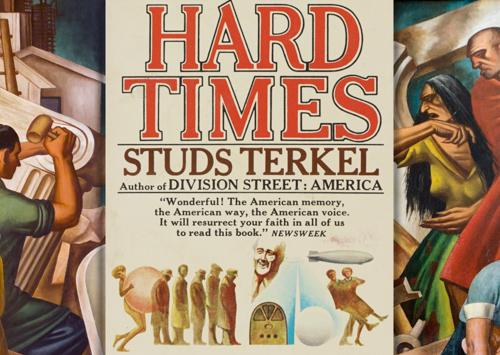
    Terkel comments and presents "Hard Times: an Oral History of the Great Depression"; Chapter 9

    1971

    Presenting "Hard Times: An Oral History of the Great Depression" Chapter 9: God Bless the Child. In this section, interviewees are children that grew up during the Great Depression they talk about their experiences. Jane Yoder and her son Tom Yoder discuss the shame that can accompany poverty and the importance of warmth and food over all else. Bob Leary is a cab driver that talks about his father's lack of self-confidence even when able to find work. Daisy Singer remembers the need to keep up appearances.

  • Sir George Bolton of Bank of London discusses British economic depression

    Sep. 23, 1970

    Sir George Bolton discusses how the 1929 American stock market crash affected international banking and investment and how economy and culture relate to each other.

Major Support Provided By
The Becca Kopf Memorial Circle of Friends
WFMT Radio Network & Chicago History Museum

This site is being managed by WFMT in partnership with the Chicago History Museum.

Library of Congress

In-kind digitization services of the Studs Terkel Radio Archive are provided by the Library of Congress.

National Endowment for the Humanities

The Studs Terkel Radio Archive has been made possible in part by a major grant from the National Endowment for the Humanities: Exploring the human endeavor.

Studs Terkel Radio Archive

All Programs About The Archive About Studs Supporters Contact

©2026 WFMT Radio Network | Site by Jell Creative

Any views, findings, conclusions, or recommendations expressed in this web resource do not necessarily represent those of the National Endowment for the Humanities.