

Main navigation

  • Home
  • Explore
  • Interact
      • Clips Explore themed playlists of audio clips from the Archive.
      • Reuse Listen to creative reuses of Studs’ interviews.
      • Remix Combine audio from the Archive to create entirely new works.
  • Podcast
  • Classroom
  • Donate
People
Topics
Has Audio or Transcript
Showing 1 - 2 of 2 results
  • Linda Winer

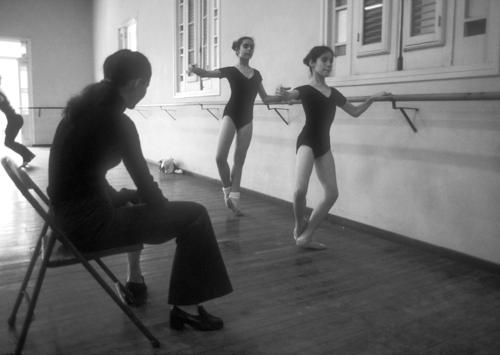
    Linda Winer discusses Cuban dance, culture, and politics

    Dec. 13, 1974

    Art critic Linda Winer discusses her Chicago Tribune series on Cuba social culture and political conditions, especially in regards to dance companies. Studs plays a live version of "Guantanamera" - Pete Seeger (1963), "Canto Para Elegua" - Grupo Folklorico de Cuba, and “Canto a Wamba” - El Conjunto Experimental Santero.

  • Katherine Dunham discusses her studies in dance anthropology

    Sep. 28, 1978

    Interviewing Katherine Dunham, anthropologist, choreographer, and dancer. Dunham discusses various subjects including Haitian Vodou, an African diasporic religion, and the importance of cultural dance. Content Warning: This conversation has the presence of outdated, biased, offensive language. Rather than remove this content, we present it in the context of twentieth-century social history to acknowledge and learn from its impact and to inspire awareness and discussion.

Major Support Provided By
The Becca Kopf Memorial Circle of Friends
WFMT Radio Network & Chicago History Museum

This site is being managed by WFMT in partnership with the Chicago History Museum.

Library of Congress

In-kind digitization services of the Studs Terkel Radio Archive are provided by the Library of Congress.

National Endowment for the Humanities

The Studs Terkel Radio Archive has been made possible in part by a major grant from the National Endowment for the Humanities: Exploring the human endeavor.

Studs Terkel Radio Archive

All Programs About The Archive About Studs Supporters Contact

©2026 WFMT Radio Network | Site by Jell Creative

Any views, findings, conclusions, or recommendations expressed in this web resource do not necessarily represent those of the National Endowment for the Humanities.
