

-
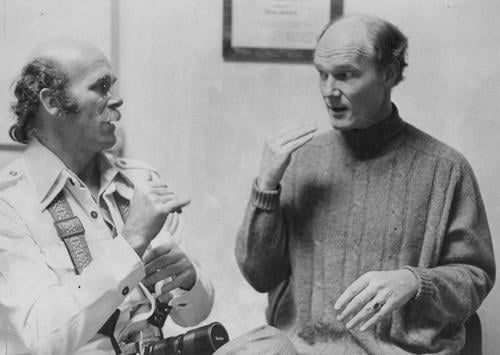
Several members of the cast of The Theater for the Deaf discuss their production ; Couples with a brief interview with John Cage and "Music for Carillon" is played.
Apr. 23, 1968 Rilla Bergman, Lou Fant, and Bill Reese converse with Studs about The National Theater for the Deaf and the production they are presenting. Two of the actors Ms. Bergman and Mr. Reese discuss what it took to learn, as hearing people, the best ways to express themselves with sign language. They all talk about how much more expressive the actors in the Deaf Theater have to be to convey the message of the piece they are presenting.
-

Mary Lynn Kotz discusses her book "Rauschenberg, Art and Life"
Oct. 29, 1991 In Mary Lynn Kotz's book, "Rauschenberg, Art and Life," Kotz recounts the works and story of 20th century art pioneer Robert Rauschenberg. They survey his career beginning in Port Arthur, TX, discussing his Depression-era upbringing which caused him to reuse and salvage virtually any object and transform it into art, his studies in Paris, made possible by the G.I.
-
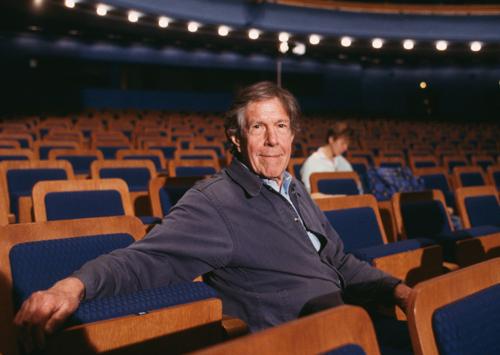
John Cage discusses his music, life, influences, and career
Aug. 13, 1992 John Cage discusses his music, life, influences, and career. Rebroadcast of an interview with John Cage to celebrate his life and what would have been soon his 80th birthday. Includes a clip of John Cage reading/ telling a story in 1969 to Studs Terkel.
-

John Cage and Merce Cunningham discuss their collaborations, careers, choreography, and music
Mar. 10, 1975 John Cage and Merce Cunningham discuss their collaborations of choreography and music. They discuss their influences and careers. Includes a clip of an earlier interview with John Cage.
-
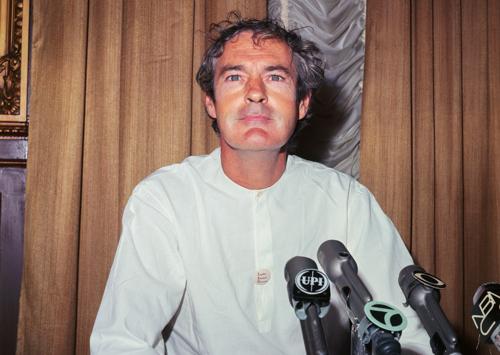
Dr. Timothy Leary discusses the stages of the psychadelic experience of turning on and his role as a Shaman ; part 2
Dec. 1, 1966 Studs interviews Dr. Timothy Leary about the three stages of the psychadelic experience: turning on, tuning in, and dropout. Leary discusses how his life changed from being a successful psychologist and professor at Harvard to renewing his life as a religious teacher. He shares how the drug LSD is used in the tribal communities who turn on and also explains the values of those who practice turning on. Leary also describes other methods used to turn on, which he considers a religious experience. Studs reads what Richard Goldstein said about Dr. Leary.
-
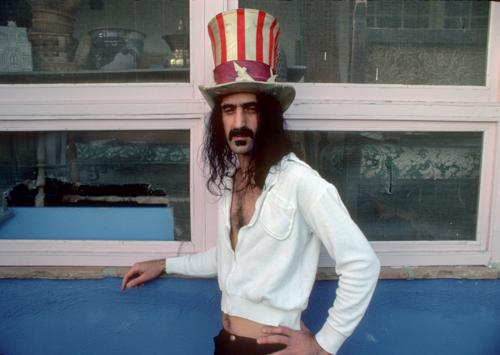
Discussing the music of the Mothers of Invention and interviewing Frank Zappa
Aug. 1, 1970 Discussing the music of the Mothers of Invention and interviewing Frank Zappa. Songs include "Who are the Brain Police," "Brown Shoes Don't Make It," "Concentration Moon," "Mom and Dad," "Bow Tie Daddy," "Harry, You're a Beast," "What's the Ugliest Part of Your Body?" "Trouble Every Day," "Very Distraughtening," "White Ugliness" and "There Will Come a Time."
-
Cathy Berberian discusses her singing style
1967 Cathy Berberian reflects on the evolution of her avant-garde singing style and her work with various contemporary music composers. Includes an interview with John Cage. Content Warning: This conversation has the presence of outdated, biased, offensive language. Rather than remove this content, we present it in the context of twentieth-century social history to acknowledge and learn from its impact and to inspire awareness and discussion.