

-

Interview with Barbara Cartland
Sep. 17, 1970 Discussing British depression with Barbara Cartland at her castle (part 2) while Studs was in England.
-
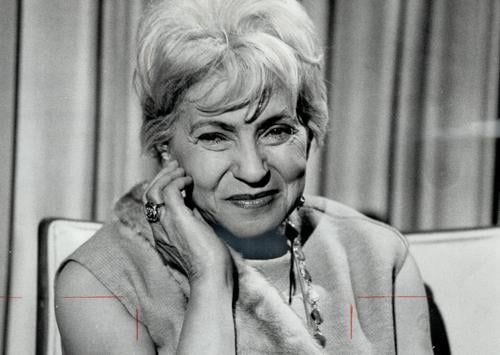
Ida Kaminska discusses her career
Apr. 13, 1966 Through an interpreter, Madame Ida Kaminska discusses her role in the film "The Shop on Main Street." Both her mother and father were actors, too. Madame Kaminska explains she comes from a family of actors from 100 years ago.
-
Hildegard Knef discusses her book, "The Gift Horse: Report on a Life" and the experiences of her life in Nazi Germany and as an actress in America post World War II
1971 Studs interview with Hildegard Knef, actress and writer. They discuss her life in Nazi Germany during the war and her experience as an actress when she came to America. Studs and Hildegard read together from her book, "The Gift Horse." Knef describes her family, Nazi Germany, survival, and her experience as a German in American post WWII. Her husband, David Anthony Palastanga, also reads an excerpt from her book.
-
Henry Steele Commager discusses America, American history, and American relations; part 1
May. 1, 1967 Henry Steele Commager discusses America, American history, and American relations. He also discusses television, historical figures, and wars. (Recorded at the Orrington Hotel in Evanston, Ill.).
-
Harrison Salisbury discusses his book "The 900 Days: The Siege Of Leningrad" and Isabella Zorina discusses a trip to mass graves
Jul. 1, 1982 Harrison Salisbury discusses his book “The 900 Days: The Siege Of Leningrad” and the lasting impact of the siege on the Soviet Union and life in Leningrad during the siege. Salisbury reads a poem by Olga Bergholz.Isabella Zorina discusses a trip to mass graves, including the many young people who were also visiting, some as part of wedding ceremonies, and the music played at the graves. Terkel plays Beethoven's Symphony No. 3, conducted by Leonard Bernstein, at the end of the program.
-
Handasyde Buchanan and Miss Dillon discuss life in London, England and Scotland, bookshops, and book selling; part 1
1962 Interviewing booksellers Handasyde Buchanan and Miss Dillon while Studs was in England. They discuss life in London, England and Scotland, their bookshops, and book selling.
-
Hamilton Fish III discusses American history
Colonel Hamilton Fish III discusses American history. Major topics include The Great Depression, Franklin D. Roosevelt, World War II, and Communism. Fish also reads a personal letter sent to him from Martin Dies, Jr. Content Warning: This conversation has the presence of outdated, biased, offensive language. Rather than remove this content, we present it in the context of twentieth-century social history to acknowledge and learn from its impact and to inspire awareness and discussion.
-
Elisabeth Schwarzkopf discusses her role as The Marschallin in Der Rosenkavalier ; part 3
Nov. 2, 1960 Studs Terkel discusses with Elizabet her her role as The Marschallin in Der Rosenkavalier. This interview is done in three parts.
-
Donald Sassoon discusses his book “One Hundred Years of Socialism: The West European Left in the Twentieth Century”
May. 2, 1997 Donald Sassoon, professor and writer, discusses his book “One Hundred Years of Socialism: The West European Left in the Twentieth Century.” Sassoon explores the history of socialism in Europe since 1889 and socialism's relationship with capitalism. He explains how the 1930 depression and World War II affected the growth of socialism in Europe and America. He also explains the creation and government of the Soviet Union
-
Allan Berube discusses his book "Coming Out Under Fire"
Apr. 30, 1990 The military's attitude toward gay people is what's covered in Allan Berube's book, "Coming Out Under Fire: The History of Gay Men and Women in World War II." For some people, hiding their true identity was necessary because they would have been discharged by the military.