

-

William Shirer discusses his book “Twentieth Century Journey: 1930-1940: Volume II”
Jun. 1, 1984 Discussing the book "Twentieth century journey: 1930-1940" with the author William Shirer.
-
Talking about rock and roll, with Jim Miller
Dec. 16, 1980 The reporter and editor takes Studs on a tour of popular music from the second half of the 20th century, as further described in his book, The Rolling Stone Illustrated History of Rock and Roll.*Please note: some sections have been edited out from the original recording due to copyright considerations
-
Russell Barrett discusses his book, "Integration at Ole Miss"
Mar. 9, 1965 Political science professor and author Russell Barrett discusses and reads excerpts from his book, “Integration at Ole Miss.” He examines the legal challenges, apathy, and aggression that contributed to the build up of racial tensions leading to the enrollment of the University of Mississippi’s first black student — James Meredith — and the resulting riots and violence. Includes a recording of the Chad Mitchell Trio singing "Alma Mater (About Ole Miss)."*Please note: some sections have been edited out from the original recording due to copyright considerations
-

Paul Cowan discusses his book "The Making of an UnAmerican", part 2
May. 4, 1970 Writer and activist Paul Cowan discusses the Peace Corps and his book "The Making of an UnAmerican", part 2
-

Paul Cowan discusses his book "The Making of an UnAmerican," part 1
May. 4, 1970 Writer and activist Paul Cowan discusses the events and experiences that inspired his book "The Making of an UnAmerican," part 1.
-
Paul Cowan discusses his book "An Orphan in History"
Jan. 7, 1983 Discussing the book "An orphan in history: retrieving a Jewish legacy" with the author Paul Cowan.
-
Michael Anania discusses his poetry collection, "The Color of Dust"
1970 Poet and editor Michael Anania discusses his poetry collection, “The Color of Dust” and reads selected works from the collection. Anania discusses Midwest history and geography and his own Nebraska roots as influences on the work and its themes of love, war, and social issues. Episode includes relevant music and theatrical recordings, including “Immortality” read by William Jennings Bryan, “Rake and Rambling Boy,” Jefferson Airplane’s “Somebody to Love,” “Dust Bowl Refugee” by Woody Guthrie, and “The Battle Hymn of the Republic.”
-
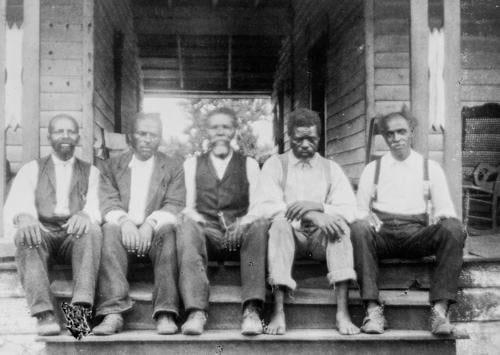
Lerone Bennett, Jr., John Hope Franklin and Hoyt Fuller discuss the book "Distortions of Negro History"
Jun. 3, 1965 Discussing "Distortions of Negro History" and interviewing Lerone Bennett, Jr., John Hope Franklin and Hoyt Fuller.
-
Interview with Lionel Carley
Apr. 29, 1985 Discussing the book "Delius, a Life in Letters, volume 1: 1862-1908" (published by Harvard University Press) with archivist Lionel Carley.
-
In this interview with Random House President and CEO Bob Bernstein and James Mitchell, Editor-in-Chief of the new Random House Encyclopedia talk with Studs Terkel
Sep. 26, 1977 In this interview with Random House President and CEO Bob Bernstein and James Mitchell, Editor-in-Chief of the new Random House Encyclopedia, the three gentlemen discuss the content and revolutionary layout of the single-volume 3,000 page tome, which was divided into 2 sections: the Colorpedia and the Alphapedia. Bernstein and Mitchell demonstrate how to use the encyclopedia and point out the explanatory diagrams throughout, which served a two-fold purpose: to catch the reader's attention, and then provide further information.
-
H. E. F. Donahue discusses his book "The Higher Animals"; part 1
Jan. 25, 1964 H.E.F Donahue discusses his book "The Higher Animals". Donahue goes into depth about the characters in his book and touches on the subjects of evolution, history, literature, and his life. H.E.F. Donahue quotes Charles Darwin.
-
Gore Vidal discusses his book “Lincoln”
Jun. 22, 1984 Discussing the book "Lincoln" with the author Gore Vidal.
-
Discussing the book "The American inquisition: justice and injustice in the cold war" with the author Stanley Kutler
Dec. 16, 1982 Discussing the book "The American inquisition: justice and injustice in the cold war" with the author Stanley Kutler.
-
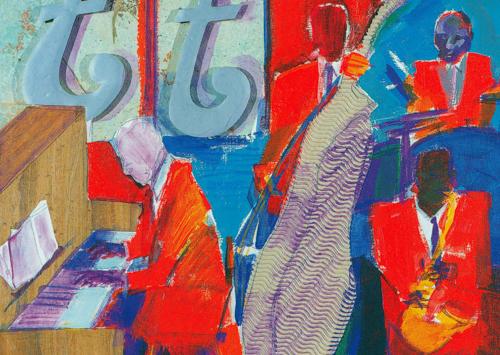
Discussing the book "Jazz Piano: History and Development" with Billy Taylor
Nov. 16, 1982 Studs Terkel and Billy Taylor discuss the book "Jazz Piano: History and Development". They discuss jazz musicians and the history of jazz music. Includes excerpts of drums, piano, and orchestra playing in the background.
-
Discussing music history and the book "John Hammond on record" with the author John Hammond, Sr.
Mar. 13, 1981 Discussing music history and the book "John Hammond on record" with the author John Hammond, Sr.