

-

Frank Carney, Susie Gelaga, Linda Gelaga, Molly Gelaga and Fred Christy discuss the youth in Chicago ; part 1
1968 Interviewing Frank Carney, Susie Gelaga, Linda (daughter-in-law), Molly (daughter), and Fred Christy. They discuss the youth of Chicago and their own life experiences.
-
Francis S. Chase discusses education, art, and science ; part 1
Dec. 30, 1964 Francis S. Chase discusses education, art, and science. Chase also discusses creativity, human behavior, and technology among other topics. Includes a clip of an interview with Dr. Jay Bernofsky.
-

Francis Edmonds discusses education and the Waldorf School, part 2
Mar. 9, 1970 Educator Francis Edmonds discusses education and the Waldorf School, part 2 of 2. Topics include the London Waldorf School philosophy, which can be summed up by a quote from founder Rudolf Steiner-- "Accept the children with reverence, educate them with love, send them forth in freedom."
-
Francis Edmonds discusses education and the Waldorf School, part 1
Mar. 9, 1970 Educator Francis Edmonds discusses education and the Waldorf School, part 1 of 2. Topics include art therapy, color philosophy, and the London Waldorf School philosophy, which can be summed up by a quote from founder Rudolf Steiner-- "Accept the children with reverence, educate them with love, send them forth in freedom." The interview also includes a brief clip from Mr. Ogletree from the Esperanza School in Chicago.
-
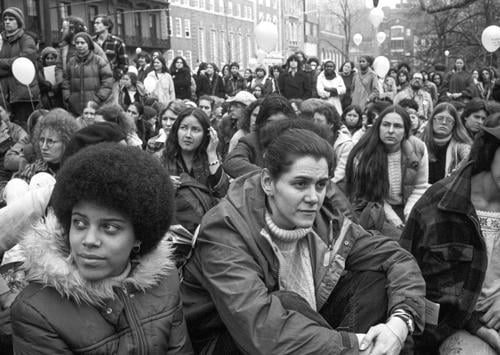
Dr. Marlene Dixon, Nancy Stokely and Janet Tenney discuss women's rights; part 1
Mar. 11, 1969 Discussing women and women's rights with Dr. Marlene, Nancy Stokely, and Janet Tenney. They discuss the women's suffrage movement, gender equality, and women's roles. Includes the women's suffrage song "The New America" by Elizabeth Knight.
-
Dr. Harold Taylor sits down with Studs Terkel
May. 24, 1962 Educator and lecturer Harold Taylor discusses with Studs a variety of higher-education related topics, including being students being politically aware, on-campus activism and the role of instructors in students' lives.
-

Dr. Bertram Carnow, and Joan and Bob Ericksen discuss health hazards in work environments
Jun. 5, 1974 Discussing health hazards in work environments and environmental pollution. Interviewing Dr. Bertram Carnow and Bob and Joan Ericksen.
-
Discussing the book, "How Children Fail," and interviewing the author John Holt ; part 2
1970 Educator John Caldwell Holt discusses his book "How Children Fail," part 2. This is a continuation of the conversation from "1993414-4-1."
-
Discussing the book, "How Children Fail," and interviewing the author John Holt ; part 1
1970 Educator John Caldwell Holt discusses his book, "How Children Fail," part 1.
-
-
Discussing Montessori and Steiner Waldorf schooling with Hans A. Schieser and Theo Buergin
Apr. 3, 1981 Discussing education and alternative schools with Theo Buergin and Hans A. Schieser. They discuss educators, philosophers, and psychologists such as Rudolf Steiner, Maria Montessori, and Jean Piaget.
-
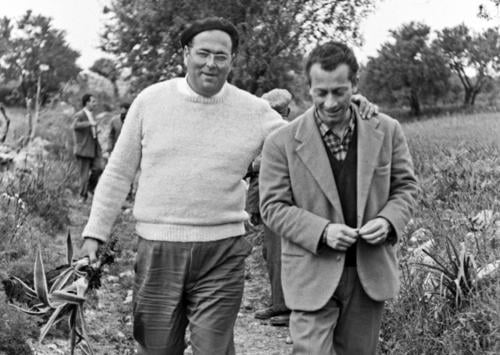
Danilo Dolci discusses his career, life in Italy, and his book "The Man Who Plays Alone"
1970 Danilo Dolci discusses his life in Italy, his book "The Man Who Plays Alone", architecture, agriculture, social activism, his inspirations, and his career. Tom Cornell translates for Danilo Dolci. Includes at the end of the program an Italian song by Jerre Mangione and an Italian song called "Bella Ciao".
-

Connie Kolb and Ursula Bender discuss life in Germany
Sep. 1, 1986 Connie Kolb and Ursula Bender discuss life in Germany, specifically Berlin. Connie Kolb discusses her life struggles, lack of confidence, and her work in journalism.
-
Christopher Lasch in conversation with Studs Terkel
Sep. 20, 1984 Discussing excellence in education with author, historian and cultural critic Christopher Lasch.
-
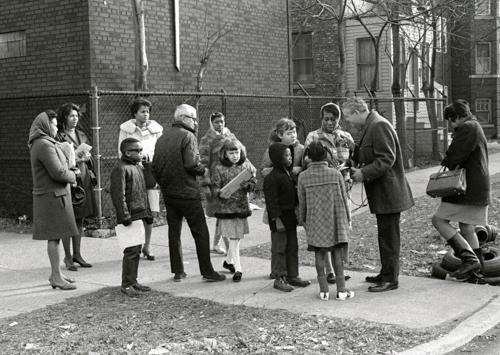
Chicago school teachers and principals discuss Chicago schools
1970 Discussing the state of West side Chicago schools with a panel of teachers and principals from four different schools.