

-

Willie Dixon and Koko Taylor discuss the blues and how you create blues music
1982 Studs interviews Willie Dixon and Koko Taylor about the blues. They discuss their song "Insane Asylum" and their work together. Dixon uses his song "Little Red Rooster" to help explain how the blues are created from life experiences. Taylor reflects on singers like Willie Dixon, Memphis Minnie, and others who influenced her desire to sing the blues. Taylor also discusses European audiences and blues influence there. The musical numbers are removed from this edited version of the original recording.
-
Phyl Garland discusses her book "Sound of Soul" and the history of black music in America ; part 2
Nov. 25, 1968 Studs interviews Phyl Garland about her book "Sound of Soul." They discuss various musicians that she mentions in her book and their influence on black music. Garland explains the music of young black artists and how commercialization of music gave blacks an opportunity that they would not have had otherwise. Garland talks about how Fannie Lou Hamer used music to express her message in the Civil Rights Movement and as a women's rights activist. Studs and Garland discuss various black female artists and their music.
-
James Dapogny discusses jazz and the many faces of the genre
Aug. 14, 1984 Bandleader, jazz musicologist and composer James Dapogny discusses his work in reviving the sound and art of jazz. Dapogny's work is mainly associated with his group James Dapogny's Chicago Jazz Band and his career in publishing lost works of Ferdinand "Jelly Roll" Morton.
-
Gana M'Bow discusses Senegalese folk music
Oct. 1, 1965 In addition to talking about Senegalese music, Gana M'Bow goes over the history of the "talking drum." M'Bow also plays various songs from Senegal and West Africa. Through the State Department, M'Bow was touring various cities across the US.
-
Dr. Samuel Floyd, Jr. discusses his book "The Power of Black Music: Interpreting Its History from Africa to the United States"
Feb. 21, 1996 Author Dr. Samuel Floyd discusses his projects in relation to black music and elements from his book "The Power of Black Music: Interpreting Its History from Africa to the United States." Includes an interview with Langston Hughes.
-
Dempsey Travis discusses big band jazz players
Nov. 21, 1994 Dempsey Travis, real estate entrepreneur and civil rights activist turned historian and author, recalls his earlier days meeting and listening to many of the African American jazz artists. Some of the musicans mentioned are Louis Armstrong, Jimmie Lunceford, Fletcher Henderson, Duke Ellington, Earl Hines, Art Tatum, Cab Calloway, Nat King Cole, and Benny Goodman.
-
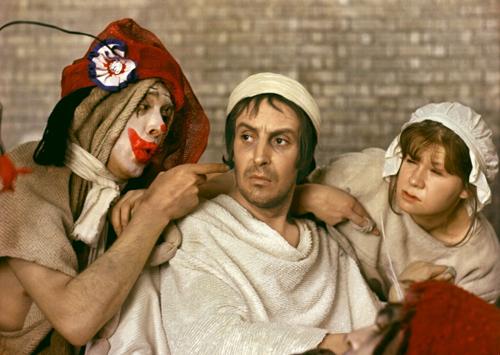
Composer Richard Peaslee discusses his work for the film "Marat/Sade"
Feb. 1, 1967 Richard Peaslee discusses his work as a composer in the film "Marat/Sade" directed by Peter Brook and based off Richard Weiss' 1964 play.