

-

Fela Sowande discusses his career and Nigerian music ; part 3
Jul. 3, 1962 Fela Sowande discusses his career, music, and compares African culture and music to Western culture and music. Includes two songs that are sung by tenor Max Worthley. Includes a clip of a Nigerian Youth song. Includes performance by a Nigerian skiffle band. Sowande was inspired by [Anthony Gregascoigne], an English poet he met in England.
-
Fela Sowande discusses his career and Nigerian music ; part 2
Jul. 3, 1962 Fela Sowande discusses his career, different types of Nigerian and African music, the Yoruba people, and religion. Includes clips of an African Yoruba pagan hymn "Oyigiyigi," a Christian version of that hymn, and an organ version of that hymn. Includes Sowande's song "Roll de Ol' Chariot." Quotes a poem by [Anthony Gregascoigne], an English poet he met in England.
-
Fela Sowande discusses his career and Nigerian music ; part 1
Jul. 3, 1962 Fela Sowande discusses his career, Nigerian music, and compares African culture and Western culture. Includes clips of musical performances by Highlife musicians and orchestra. Music: A clip of high-life music, "Folk Symphony for Full Orchestra."
-
Ernest Morgan discusses the Arthur Morgan School in Burnesville, NC with Studs Terkel
Aug. 9, 1965 Interview with Ernest Morgan about the Arthur Morgan School in Burnesville, NC that was founded by family. They discuss the teaching and learning ideology for the students (aged 12-16) who attend the school. Ernest describes the curriculum that includes outdoor learning in Black Mountain where the school is located. Includes a piece from an interview with Alexander Sutherland Neill about student and school adjustment. Ernest Morgan quotes Martin Luther King on maladjustment.
-
Edward W. Said discusses Palestine, history of and struggles in the Middle East
Oct. 1, 1984 Edward W. Said talks about the importance of language in shifting perceptions of Middle Eastern people, refutes some opinions about Palestine, identities, and overlapping Eastern and Western cultures.
-
Edward T. Hall discusses his book "Beyond Culture"
Apr. 28, 1976 Edward T. Hall talks about his beliefs on culture. The discussion includes how cultures differ between countries with a focus on Vietnam. They also discuss the cultural differences in America. Hall also explores how technologies, such as computers and vehicles change culture and cause people to become more like the machine itself. The end of the interview includes a short reading of "Beyond Culture".
-
Economist Robert Theobald discusses his ideas for a better world
Jan. 8, 1968 Poor people, politicians, guaranteed basic income and power are all among the topics that Robert Theobald covers to achieve a better world for mankind. Using the media better to sway the public's opinion, so that the politicians will vote in the masses' interests are all apart of Theobald's plan, too.
-
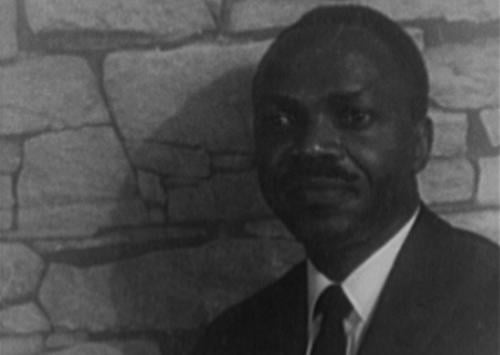
E.R. Braithwaite discusses his career and the book "Reluctant Neighbors"
1972 E.R. Braithwaite, Guyanese-born British-American novelist, writer, teacher and diplomat discusses his writing and career. The interview opens with Mr. Braithwaite, reading from his book "Reluctant neighbors".
-
Dr. Samuel Gorovitz discusses the book "Doctors' Dilemmas"
Sep. 22, 1982 In his book, "Doctors' Dilemmas: Moral Conflicts in Medical Care," Samuel Gorovitz tries to show his readers the moral dilemmas that doctors face. Gorovitz explained that physicians need to learn what it’s like to be a patient. Gorovitz also believed that before a student enter medical school, he or she should have spent some time in a hospital as a patient.
-
Dr. Samuel Floyd, Jr. discusses his book "The Power of Black Music: Interpreting Its History from Africa to the United States"
Feb. 21, 1996 Author Dr. Samuel Floyd discusses his projects in relation to black music and elements from his book "The Power of Black Music: Interpreting Its History from Africa to the United States." Includes an interview with Langston Hughes.
-
Dr. Samuel Floyd, Jr. discusses Black music, history, and culture
Oct. 11, 1990 Interviewing Dr. Samuel Floyd, author and scholar of Black music. He discusses prominent Black musicians and composers who shaped their perspective genres.
-
Dr. Samual Floyd talks with Studs Terkel
Mar. 17, 1988 Interviewing author and scholar of Black music Dr. Samuel Floyd, Jr.
-
Dr. Richard Selzer discusses his book "Mortal Lessons: Notes on the Art of Surgery"
Feb. 17, 1977 Dr. Richard Selzer, a surgeon, reads essays from his book, "Mortal Lesson: Notes on the Art of Surgery." Dr. Selzer recalls moments of his profession that stuck with him including the removal of a diabetic women's leg and the removal of a botfly larvae. He also takes a poetic look at the liver and the skin, including a story about Henry Moss. Dr. Selzer finishes his interview with a story about his first time witnessing an abortion. A comedy skit by Mike Nichols and Elaine May is also played.
-
Dr. John C. Lilly discusses his book "Center of the Cyclone"
Feb. 22, 1972 Discussing the book "Center of the Cyclone: An Autobiography of Inner Space" with the author Dr. John C. Lilly.*Please note: some sections have been edited out from the original recording due to copyright considerations
-
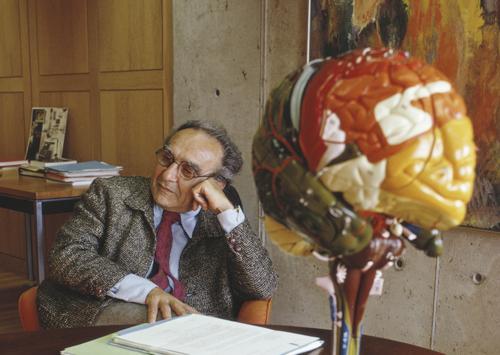
Dr. Jacob Bronowski discusses the philosophy of science in the post World War II world
Jan. 1, 1971 Dr. Jacob Bronowski, a mathematician and philosopher, discusses how the study of science has changed since the onset of government regulation or the military industrial complex. He also talks about humanity and explains how humans are the best species and therefore should come together to continue progress instead of killing each other. Content Warning: This conversation has the presence of outdated, biased, offensive language.