

-

Norman Thomas and Lillian Smith discuss dissenting ; part 2
Nov. 11, 1961 Content Warning: This conversation includes racially and/or culturally derogatory language and/or negative depictions of Black and Indigenous people of color, women, and LGBTQI+ individuals. Rather than remove this content, we present it in the context of twentieth-century social history to acknowledge and learn from its impact and to inspire awareness and discussion. Lillian Smith's father taught her that we're all human beings and that no one was better than another person.
-
Norman Maclean reads from and discusses his book "A River Runs Through It"
Jun. 8, 1976 Fly fishing, relationships and people Norman Maclean has met are all apart of his book, "A River Runs Through It." Maclean's father taught Maclean and his brother the art of fly fishing. Maclean's book is semi-autobiographical with three short stories.
-
Norma Field reads from and discusses the book "In the Realm of a Dying Emperor"
Jan. 22, 1992 "In the Realm of a Dying Emperor: A Portrait of Japan at Century's End," is Norma Field's story of dissenters against Emperor Hirohito. There's the story of Mr. Chibana, a supermarket owner, who was arrested for burning the flag of the Rising Sun because he learned of the mass suicides by the people of Okinawa. There were also some that believed Emperor bore some responsibility for WWII when being told it was imperative to fight the sacred war.
-
Norbert Blei reads from and discusses his book "Chi-Town"
Oct. 19, 1990 When talking about his book, "Chi-Town," Norbert Blei said all the communities in Chicago offer everyone the groups' separate ethnic cultures. Blei also talks about riding the Douglass Park El and the old man sitting on a bench, who he encounters at Grant Park. Lastly, Blei talks about writers who have influenced him.
-
Nicholas Von Hoffman discusses university and college educations ; part 1
Jun. 9, 1965 Journalist Nicholas Von Hoffman shares his critical thoughts about universities and colleges. Students are told what to read for class and students are taught how to pass exams, says Von Hoffman. Testing and exams don't work, contends Von Hoffman. Students must be allowed to read more about a subject on their own as opposed to what's solely offered by the curriculum's books.
-
Nicholas Von Hoffman discusses his novel, "Two Three Many More" with Studs Terkel
1970 Nicholas Van Hoffman discusses the characters of his novel, "Two Three Many More" about campus protests against the Vietnam War. Political viewpoints, regulations, and character analysis are discussed. Von Hoffman opens the interview with a reading from the opening of the book that mentions peace, solidarity, and disunity. Terkel and Von Hoffman read excerpts together from the book.
-
Nicholas Von Hoffman discusses his book “Left at the Post”
Dec. 18, 1970 Nicholas Von Hoffman talks about his book "Left at the Post: Passions, Prejudices, and Laments of One of America's Most Generously Biased Writers". Additional topics include biased journalism, objectivism in news reporting, and politics.
-
Newton Minow discusses broadcasting
Jan. 11, 1964 Interviewing Newton Minow, Chicago lawyer and chairman of the Federal Communications Commission. He discusses broadcasting as a public service and spends a great deal of time on the history of commercials and how they changed over time.
-
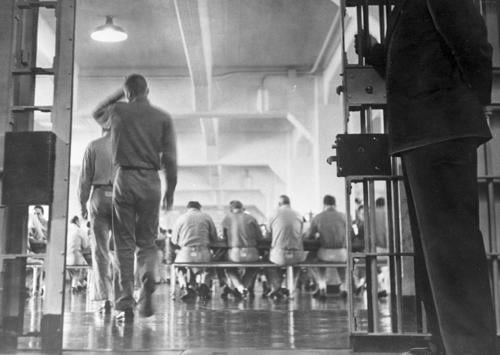
Nelson Algren, Nathan Kantrowitz, and David Maurer discuss language and characteristics of the criminal underworld
Jan. 29, 1967 Nelson Algren, Nathan Kantrowitz, and David Maurer discuss language and criminal subculture, including the development of institutional slang at different prisons, the nature of drug addiction and its influence on criminal language and vocabulary, and the myth of the criminal mind. Includes an Interview with an inmate at a Chicago prison.
-
Nelson Algren discusses capital punishment
1965 Discussing capital punishment with author Nelson Algren. Includes interviews with William (Bill) Witherspoon, a death row inmate; Jack Johnson, warden of Cook County Jail; and an [unidentified woman] who marched in protest at the execution of James Dukes in 1962.
-
Nelson Algren and Mario De Vecchi discuss "La Dolce Vita," part 1
Jun. 17, 1961 Nelson Algren and Mario De Vecchi discuss the international appeal of Federico Fellini’s film, “La Dolce Vita.” In part one, Algren and Devecchi focus on the film’s main character, journalist Marcello Rubini, and his quest for identity, particularly in relation to his interactions with the film’s intellectual character, Steiner. They discuss the film’s key metaphorical images and its portrayal of the influence of media and the emotional detachment and dehumanization it can create.
-
Nelson Algren and Mario De Vecchi discuss ; part 2
Jun. 17, 1961 In this continued discussion of “La Dolce Vita,” Nelson Algren and Mario Devecchi discuss the film’s critical reception, the contrast it draws between humor and bitterness, and the religious and moral nature of the film. Includes part of the 36th issue of the Fiction Review, featuring host Bob Lefley, a review of the program’s first series of interviews with numerous authors, and a biography of writer Howard Nemerov.
-
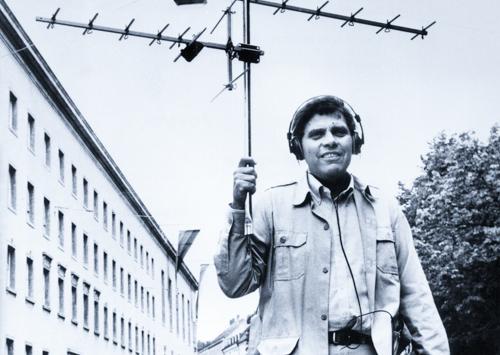
Neil Postman discusses the book, "The School Book: For People Who Want to Know What All the Hollering Is About,".
Feb. 8, 1974 Neil Postman, an author, educator, media theorist and cultural critic discusses his book; "The School Book: For People Who Want to Know What All the Hollering Is About,". Mr Postman and Studs talk about his definition of what school is for and it's worth, and they converse about several sections of the book. Mr. Postman reads an excerpt from his book to begin the interview.
-
Neil Postman discusses his book "Teaching as a Conserving Activity"
Nov. 6, 1979 In schools, reading, writing and speech are all on the decline because there are too many visual images from the TV, according to Neil Postman’s book, “Teaching as a Conserving Activity”. Postman criticized “Sesame Street” for its instantaneity. There are no short cuts in teaching, said Postman. He believed the worst thing a teacher could do was to make teaching entertaining for their students.
-
Ned Rorem discusses his writing and compositions
1966 Ned Rorem discusses the differences between writing books and writing compositions, his book "The Paris Diary of Ned Rorem", and how he uses poetry in his compositions.