

-

Willard Maas and John Dubay discuss experimental films and filmmaking, part 2
1966 Experimental filmmaker and poet Willard Maas and his friend John Dubay discuss experimental films and filmmaking, part 2 of 2. John Dubay is featured predominantly in this part of the interview. The second part of the interview focuses less on filmmaking and more on societal ills, wealth inequality, and race relations.
-
Willard Maas and John Dubay discuss experimental films and filmmaking, part 1
1966 Experimental filmmaker and poet Willard Maas and his friend John Dubay discuss experimental films and filmmaking, part 1 of 2. His friend John Dubay speaks briefly in part 1 of the interview, but is more prominently featured in part 2.
-
Will D. Campbell discusses his book "Providence"
Aug. 26, 1992 Content Warning: This conversation includes racially and/or culturally derogatory language and/or negative depictions of Black and Indigenous people of color, women, and LGBTQI+ individuals. Rather than remove this content, we present it in the context of twentieth-century social history to acknowledge and learn from its impact and to inspire awareness and discussion. Will D. Campbell, minister, activist, and author of “Providence," discusses religion, civil rights, and American history.
-
Will Campbell discusses his book “Forty Acres and a Goat: A Memoir”
Feb. 13, 1987 Preacher Will Campbell discusses and reads from his book “Forty Acres and a Goat: A Memoir” and recounts his experience during the Civil Rights movement in the South. Studs plays “His Eye Is On The Sparrow” - Mahalia Jackson (1958).
-
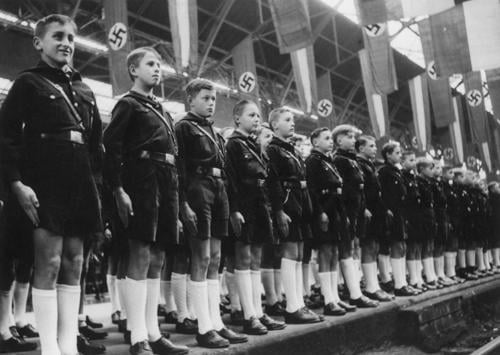
Werner Burkhardt German jazz critic and translator speaks with Studs in Hamburg, Germany.
Mar. 1, 1967 Werner Burkhardt, German music journalist, critic, and translator, discusses his life and work with Studs. Mr Burkhardt speaks about his life during the time of Adolph Hitler, the Hitler Youth, and World War II. They end the interview talking about Jazz in Munich, a recording of "My Man" by Billie Holiday closes the interview.
-
-
Warren Leming discusses and performs songs from the play "The Eight Hours"
Apr. 8, 1987 Terkel comments and presents songs and stories from "The Eight Hours"
-
Walter Terry discusses his biography of Ruth St. Denis
Jan. 19, 1970 Studs speaks with dance critic Walter Terry about his book, Miss Ruth: The More Living Life of Ruth St. Denis. They also discuss her influence on the world of dance. A few audio clips of Walter Terry interviewing Ruth St. Denis are played.*Please note: some sections have been edited out from the original recording due to copyright considerations
-
-
-
Walter Rosenblum and Daniel Nagrin discuss art, life, photography, and dance
Jun. 2, 1982 Photographer and author Walter Rosenblum, and dancer and choreographer Daniel Nagrin discuss art, life, photography, and dance. The two answer the question “What calls one to a life of art?” and other driving factors for artists such as political, social, and economic interests. Studs opens and closes this program by playing an untitled Armenian dance song.
-
Walter Lowenfels and Studs talk about living the creative life
Jun. 22, 1970 Selections from the poetry anthology, The Portable Walter, are discussed.*Please note: some sections have been edited out from the original recording due to copyright considerations
-

Walter Bernstein discusses his book "Inside Out: A Memoir of the Blacklist"
Dec. 10, 1996 American screenwriter, Walter Bernstein, discusses his book "Inside Out: A Memoir of the Blacklist".
-
Walter Bernstein discusses his book "Inside Out: A Memoir of the Blacklist"
Dec. 10, 1996 American screenwriter, Walter Bernstein, discusses his book "Inside Out: A Memoir of the Blacklist", a memoir about his life during and following his blacklisted status due to his alleged communist views. Bernstein uses the case of John Henry Faulk versus Laurence A. Johnson to serve as an example of how the entertainment industry was being diminished during this time.
-
Wallace Terry reads from and discusses his book "Bloods: An Oral History of the Vietnam War by Black Veterans"
Sep. 26, 1984 Content Warning: This conversation includes racially and/or culturally derogatory language and/or negative depictions of Black and Indigenous people of color, women, and LGBTQI+ individuals. Rather than remove this content, we present it in the context of twentieth-century social history to acknowledge and learn from its impact and to inspire awareness and discussion. Wallace Terry felt it was an important mission to tell people about the Black men who fought in Vietnam. There are stories from 20 men.