

-

-
Lillian Shirley discusses North Vietnam
Apr. 4, 1973 Discussing her reflections of what she saw in North Vietnam, including the bombed hospital, Bach Mai, with former nun Lillian Shirley. An elderly woman told Shirley that she didn't blame the American people for the bombings. Despite seeing 18 of 20 buildings of the Bach Mai Medical Center totally destroyed, Shirley said she found the Vietnamese people to be most cordial and happy.
-
Leonard Dubi, Denise Ponzetti and Mary Lou Wolff discuss the Citizen's Action Program and community activism in Chicago
1967 Father Leonard Dubi and community advocates Denise Ponzetti and Mary Lou Wolff discuss the Citizen's Action Program and community activism in Chicago.
-
Laurel Snyder discusses prostitution and the COYOTE organization
Aug. 26, 1980 Laurel Snyder describes to Studs Terkel her journey into prostitution and her involvement in the organization COYOTE, which advocates for the rights of sex workers and the decriminalization of prostitution.
-
Lady Dhanvanti Rama Rau discusses family planning in India ; part 2
Feb. 21, 1964 Lady Dhanvanti Rama Rau discusses economic inequality, poverty, and the growing population in India. She discusses the need for family planning to combat these issues. Studs plays “A Morning Raga” - Ravi Shankar.
-
Lady Dhanvanti Rama Rau discusses family planning in India ; part 1
Feb. 21, 1964 Lady Dhanvanti Rama Rau discusses economic inequality, poverty, and the growing population in India. She discusses the need for family planning to combat these issues. Studs plays “A Morning Raga” - Ravi Shankar.
-
LaDonna Harris discusses Native American history and her work with Americans for Indian Opportunity
Oct. 2, 1992 LaDonna Harris, Comanche social activist and politician, talks about Native American history and her work towards reforming the view of Native Americans. She talks about expanding the education about Native American cultures and her work with Americans for Indian Opportunity. Topics such as Columbus, Trail of Tears, religion, and civil rights are discussed.
-
-
Katherine Dunham discusses her studies in dance anthropology
Sep. 28, 1978 Interviewing Katherine Dunham, anthropologist, choreographer, and dancer. Dunham discusses various subjects including Haitian Vodou, an African diasporic religion, and the importance of cultural dance. Content Warning: This conversation has the presence of outdated, biased, offensive language. Rather than remove this content, we present it in the context of twentieth-century social history to acknowledge and learn from its impact and to inspire awareness and discussion.
-
Karen DeCrow reads from and discusses her book "The Young Woman's Guide to Liberation"
Karen DeCrow said both young ladies and young men should read her book, "The Young Woman's Guide to Liberation: Alternatives to a Half-Life While the Choice is Still Yours". DeCrow explained that young girls need to realize they should prepare themselves for being more than just a mother and a homemaker. She also stresses the importance of women not being totally dependent on men.
-
June Terpstra and two women, Ann and Donna, discuss battered women
Oct. 28, 1983 Discussing battered women with the director of the Evanston Shelter for Battered Women, June Terpstra. Two women, Ann and Donna, talk about their experiences of abuse with their husbands.
-
Juliet Mitchell discusses women, family, and oppression
Apr. 25, 1971 An interview with teacher and lecturer, Juliet Mitchell, who is a Marxist. She shares her support for the women's movement and talks about issues that affect women especially gender inequality. Juliet also refers to some comparisons between British and American women's movement.
-
Joseph Collins discusses the book "Food First"
Oct. 28, 1977 Dr. Joseph Collins co-authored the book, "Food First: Beyond the Myth of Scarcity". Among the topics in the book include world hunger, famine, food policies and politics. Collins asks the readers to think about being ok with eating food grown in another country when the workers of that country are so poor, they themselves are starving for food.
-
Joseph Collins discusses his books "Now We Can Speak" and "What Difference Could a Revolution Make?"
Feb. 8, 1983 Discussing the books "Now We Can Speak: A Journey Through the New Nicaragua" and "What Difference Could a Revolution Make?: Food and Farming in the New Nicaragua" with the author Joseph Collins.
-
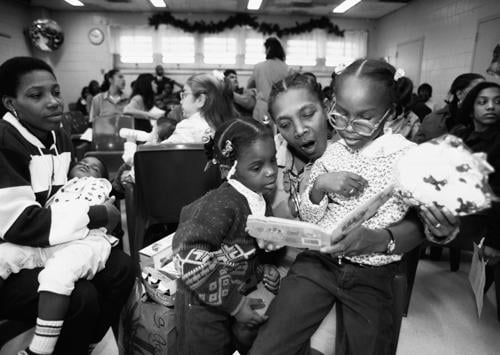
Jonathan Kozol discusses his book "Illiterate America"
Dec. 1, 1985 Jonathan Kozol discusses his book "Illiterate America." Includes an interview of a black teenager student named Jimmy.