

-

William Brashler talks about his book "Bingo Long's Traveling All-Stars and Motor Kings"
Dec. 10, 1973 Mr. Brashler converses with Studs about his research for the novel and the players he had spoken with to gather information for the book. The novel tells the story of a baseball team that revolts from a tyrannical Negro League owner and spends the 1939 season barnstorming around the Midwest. Includes two excerpts of a Cool Papa Bell interview talking about their travel as "barnstormers". Studs and Mr. Brashler read several exchanges of dialogue from the book.
-
Two Welshmen, an Englishman and housewife talk to Studs Terkel ; part 1
1968 While in England, Terkel attended a Rugby match in Wales. While at the match, he interviewed four people: two Welshman, an Englishman, and housewife. One of the people he interviewed is named David Thomson.
-
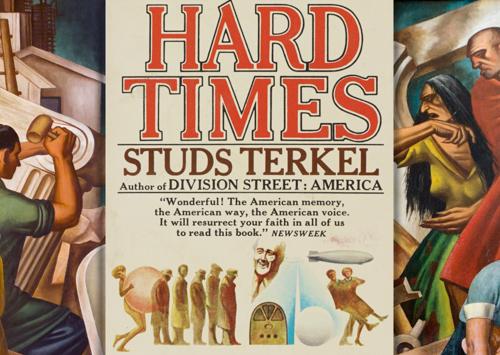
Terkel comments and presents "Hard Times: an oral history of the great depression" ; Program 5 ; part 1
1971 Presenting "Hard Times: An oral history of the great depression": "Bonnie laboring boy" with Joe Morrison, Evelyn Finn and Jose Yglesias (program V).
-
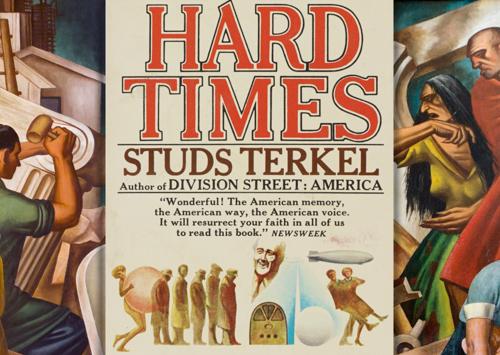
Terkel comments and presents "Hard Times: an oral history of the great depression" ; Program 5 ; part 2
1971 Presenting "Hard Times: An oral history of the great depression": "Bonnie laboring boy" with Joe Morrison, Evelyn Finn and Jose Yglesias (program V).
-
Talking baseball, with Roger Angell
May. 24, 1982 The sports essayist shares some of the observations that populate his book about baseball in the late 1970s and early 1980s - Late Innings: A Baseball Companion.*Please note: some sections have been edited out from the original recording due to copyright considerations
-
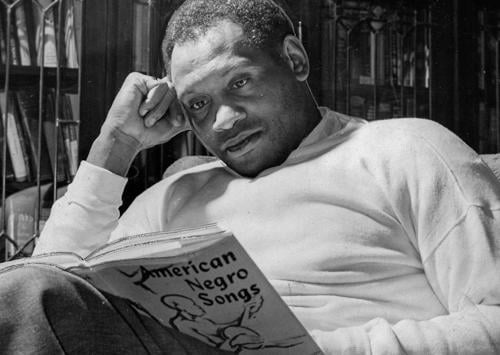
Studs presents a tribute to singer, actor, athlete, author and civil rights crusader Paul B. Robeson
Jan. 28, 1976 Studs presents a tribute to singer, actor, athlete, author and civil rights crusader Paul B. Robeson. Studs talks about his personal memories, the social impact and music of Paul Robeson. Excerpts from 1925362-4-1 Mr Robeson' friends recall memories of him: Earl Dickerson one of the 1 st black aldermen of Chicago, J. Mayo "Ink" Williams football player, Studs Terkel, Claudia Cassidy(1925655-4-1), Eddie Balchowski, Veteran, painter, poet(1934701-3-1) Includes excerpts from 1925362-4-1 and music. Similar to 1925362-3-1, but not identical. 01/23/1976 date of death.
-

Robert Lipsyte discusses book "SportsWorld: An American Dreamland"
Dec. 5, 1975 Robert Lipsyte discusses book "SportsWorld: An American Dreamland." Includes excerpt from opening passage of the book. Includes excerpt of interview with Muhammad Ali which starts around 35:33.
-
Poplar Blackwall and District Rowing Club members discuss rowing
1970 Studs Terkel’s trip to England included a visit to the Poplar Blackwall and District Rowing Club. Its members discuss the Great River Race and the culture of working on the Thames’ docks.
-
Pete Gent reads from and discusses his book "North Dallas Forty"
Oct. 5, 1974 Drugs, painkillers, football contracts, and survival are all covered in Pete Gent's book, "North Dallas Forty." Gent said the business of football meant players would take painkillers and abuse their bodies with drugs all in order to do whatever was necessary to win a game. An excerpt of an interview with George Allen is included.*Please note: some sections have been edited out from the original recording due to copyright considerations
-
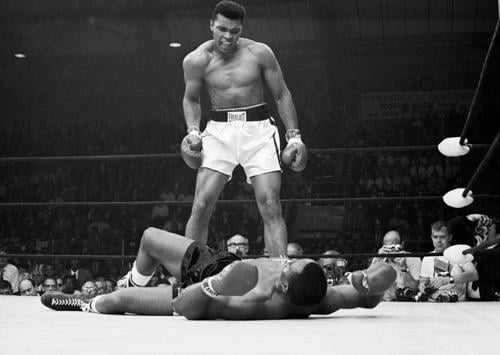
Muhammad Ali discusses his book "The Greatest: My Own Story"
Nov. 26, 1975 Content Warning: This conversation includes racially and/or culturally derogatory language and/or negative depictions of Black and Indigenous people of color, women, and LGBTQI+ individuals. Rather than remove this content, we present it in the context of twentieth-century social history to acknowledge and learn from its impact and to inspire awareness and discussion. Muhammad Ali discusses his book "The Greatest: My Own Story," touching on topics including his childhood and family, conversion to Islam, stance on the Vietnam War, and experiences in jail.
-
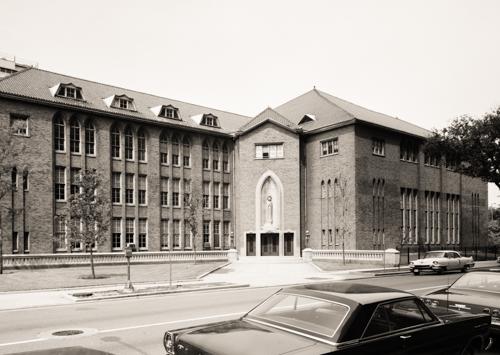
King Solomon discusses his life and Barry Byrne discusses Frank Lloyd Wright
1968 Both interviews incomplete. King Solomon as Kid Pharaoh, hot dog shop owner in Chicago, and former prize fighter. Mr. Solomon talks about his business and how he has earned his place. He talks about being a gambler, and speaks of being "rough" and receiving his money in an unorthodox manner, "protection" so to speak. The Interview ends abruptly at 13:42. At 13:43 interview begins with Barry Byrne architect and student of the "Prairie Style" talks about his education with Frank Lloyd Wright. He speaks fondly of "father"(Frank Lloyd Wright) and his time studying under him.
-
Interviewing sportswriter and editor Robert Creamer
Jun. 11, 1991 Robert Creamer talks about his new book Baseball in '41: A Celebration of the "Best Baseball Season Ever."*Please note: some sections have been edited out from the original recording due to copyright considerations
-
Interviewing Chicagoan Kid Pharaoh : part 1
An interview with Kid Pharoh, a former prize fighter, is included in Terkel's book, "Division Street: America."
-
Interviewing Chicagoan Kid Pharaoh ; part 2
An interview with Kid Pharoh, a former prize fighter, is included in Terkel's book, "Division Street: America."
-
Father Jose Alas discusses his time spent in El Salvador
Oct. 7, 1985 In 1970, because he was considered a troublemaker when helping the peasants in El Salvador obtain a better life, Father Jose Alas was kidnapped by the National Guard and left for dead. Alas explains if he were to return to El Salvador, he would be killed because he is considered a traitor. Caitriona Ruane talks for a couple of minutes about her work helping the poor in the Latin American countries.