

-

Patrick Zimmerman discusses his teaching methods for childhood education in low-income neighborhoods ; part 1
Sep. 1, 1970 Former public school teacher Patrick Zimmerman discusses education and the free school movement for low-income and underrepresented communities in Chicago. Zimmerman discusses his time spent as a public school teacher and how this inspired his transition to teaching using alternative schooling methods in childhood education.
-
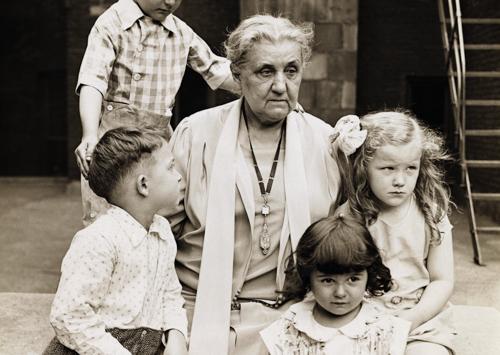
Ned Goldberg, Bertice MacDonald, Alan D. Wade discuss social work, Jane Addams and the War on Poverty
May. 1, 1966 Ned Goldberg, Bertice MacDonald, Alan D. Wade discuss social work, Jane Addams and the War on Poverty. Wade's article "What Would Jane Addams Do?" led the conversation. The three panelists are part of the National Association of Social Workers.
-
Maud Russell social worker, educator, and writer, discusses U.S./China relations
Jun. 1, 1976 Ms. Russell was a social worker with the YWCA in China from 1917-1943, and the executive director of the Committee for a Democratic Far Eastern Policy from 1946-1952. Ms Russell speaks of her time and work in China, about U.S./China relations and the cultural revolution taking place in China. Includes excerpt of Joshua Horn talking about a worker who got burned while working at a steel factory in China. He speaks of the outpouring help for the man from the community of Shanghi.(1934055-3-1)
-
Kenneth Donaldson discusses his book "Insanity Inside Out"
Jul. 19, 1976 Kenneth Donaldson discusses his book, "Insanity Inside Out" and his experience after being involuntarily committed to a psychiatric hospital. Topics of discussion include the conditions of the hospital, his experience being held there against his will, and the court case he won in front of the Supreme Court of the United States, O'Connor v. Donaldson.
-
Katherine Dunham discusses her studies in dance anthropology
Sep. 28, 1978 Interviewing Katherine Dunham, anthropologist, choreographer, and dancer. Dunham discusses various subjects including Haitian Vodou, an African diasporic religion, and the importance of cultural dance. Content Warning: This conversation has the presence of outdated, biased, offensive language. Rather than remove this content, we present it in the context of twentieth-century social history to acknowledge and learn from its impact and to inspire awareness and discussion.
-
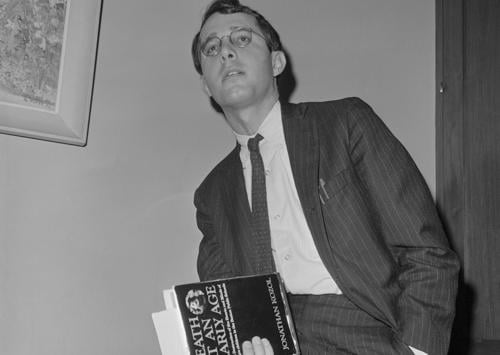
Jonathan Kozol and Patrick Zimmerman discusses about american education focusing in the Southern School at Uptown, Chicago
Nov. 13, 1973 Jonathan Kozol, the author of "Death at an Early Age" talks about issues of educational inequality and racial justice. Paul Zimmerman, former public teacher, talks about his experience creating what becomes to be the Southern School at Uptown, Chicago.
-
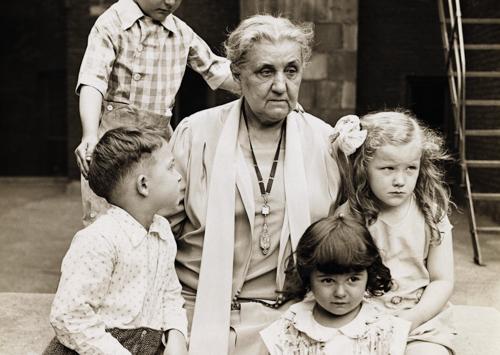
Jessie Binford discusses her life, Jane Addams, and the work they did together
Aug. 1965 Studs interviews Jessie Binford at her home at the Tall Corn Hotel in Marshalltown, Iowa. Ms. Binford reflects on growing up in Marshalltown and going to Hull House Chicago where she met Jane Addams. Ms. Binford talks to Studs about politics and the changes in technology. Includes an excerpt of a previous interview with Florence Scala.(1915178-3-1) Also, excerpts from 1963 interview with Ms. Binford(1851518-3-1, 3-2)
-
James David Barber discusses his book, "The Pulse of Politics: Electing Presidents in the Media Age," with the author James David Barber
May. 30, 1980 James David Barber, author and political scientist, discusses his book, "The Pulse of Politics: Electing Presidents in the Media Age." He explains the premise of his beliefs that presidential elections run a cycle of "conflict, conscience, conciliation," and how media affects this. He uses examples of elections from Teddy Roosevelt to Jimmy Carter. Presidential campaign songs are played throughout the interview. A record is played to hear the voices of Teddy Roosevelt and Franklin D. Roosevelt.
-
-
Interviews with Dr. Bruno Bettelheim and Marlene Dixon
Feb. 6, 1969 Discussing the controversy at U.C. concerning the administration's refusal to renew Mrs. Dixon's contract (she later was reinstated but refused to accept) with Dr. Bruno Bettelheim, University of Chicago psychiatrist and Dr. Marlene Dixon, University of Chicago professor.
-
-
-
-
Interviewing Kevin Phillips
Aug. 1, 1990 Program includes an excerpt from Hard Times (T3452B).
-