

-

Studs presents program reflecting on President Roosevelt's death
Apr. 11, 1975 Terkel presents program reflecting on individuals' recollection of the day that FDR died and the former President's legacy among younger Americans.
-
Steve Neal discusses his book "Dark Horse"
Feb. 7, 1984 Steve Neal's book, "Dark Horse: A Biography of Wendell Willkie," covers the story of a man who ran for president with no political experience. As explained by Neal, Wendell lost the election but he was still very popular with celebrity status. Wendell believed a chapter ended in his life so that a new chapter could begin.
-
Sister Betty Campbell and Father Peter Hind discuss El Salvador
Sep. 3, 1981 Sister Betty Campbell and Father Peter Hind discuss their missionary trips to Latin America. They talk about their time in Peru, Brazil, and El Salvador and working against difficult governments to help struggling people. They also recall some of violence they witnessed or heard about during the El Salvador Civil War, including the execution of four American missionary women.
-
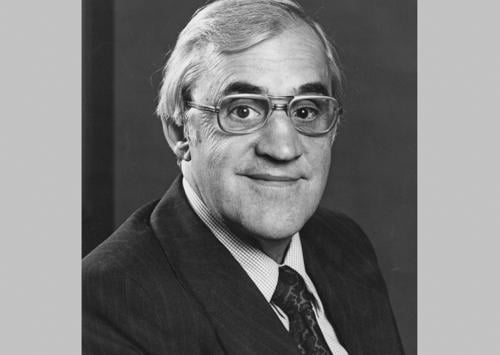
Sir Roy Shaw discusses the arts
Oct. 1, 1985 Secretary General of the British Arts Council Sir Roy Shaw and Studs Terkel discuss making the arts accessible for everyone and how the arts are a benefit to communities. Studs Terkel reads a quote from Kingsley Amos.
-
Sergeant Garland Davis discusses his profession ; part 2
Even though his life was threatened, when a young man told him his goal in life was to see Davis dead, Sergeant Garland Davis, continues to work in the youth crime division, in the hopes by be-friending the young people, they will do something positive with their lives. Davis also adds that the parents of these young people, along with the communities in which they live, play parts in the youths' behavior.
-
Sergeant Garland Davis discusses his profession ; part 1
An officer with the Chicago department, Sergeant Garland Davis, talks about his presence in the community, in hoping that some of the young people he works with see him as a friend and not solely as a cop. Davis also talks about the priority being helping the youth before their lives take a wrong turn into a life of crime.
-
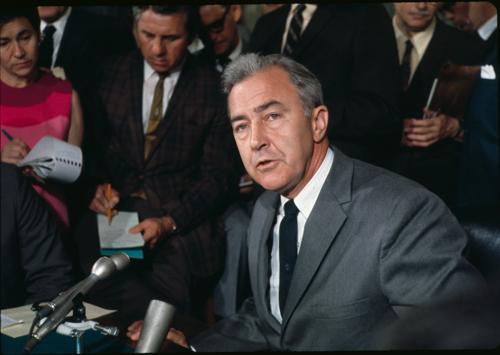
Senator Eugene McCarthy talks about his presidential campaign
Mar. 3, 1975 Former Minnesota Senator Eugene McCarthy talks about his presidential campaign. Includes an excerpt of a 1968 program in which Studs and James Cameron visit Lincoln Park after the Chicago Democratic Convention riots.
-
Ron Kovic discusses his autobiography "Born on the Fourth of July"
Jul. 29, 1977 Studs interviews Vietnam veteran and anti-war activist Ron Kovic upon the paperback release of his autobiography "Born on the Fourth of July." Kovic recounts his All-American upbringing and unblinking faith in the country and its ideals before volunteering for the Marines and Vietnam.
-
Roger Wilkins discusses his book "A Man's Life"
Aug. 30, 1982 Discussing the book "A man's life" with the author Roger Wilkins.
-
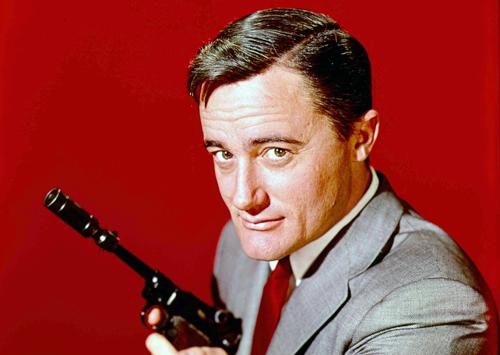
Robert Vaughn talks with Studs Terkel
1970 Robert Vaughn takes time out from his Drury Lane appearance in "Tender Trap" to discuss his new book "Only Victims" with Studs Terkel. The discussion spans the years 1938 when Martin Dies became the first House Committee on Unamerican Activities (HUAC) chairman to Vice President Spiro Agnew's condemnation of the "New York Times" and "Washington Post". Vaughn created the title of his book "Only Victims" from a Dalton Trumbo speech that reflected back on the era of HUAC as being one where there were no heroes, no villains, only victims.
-
-
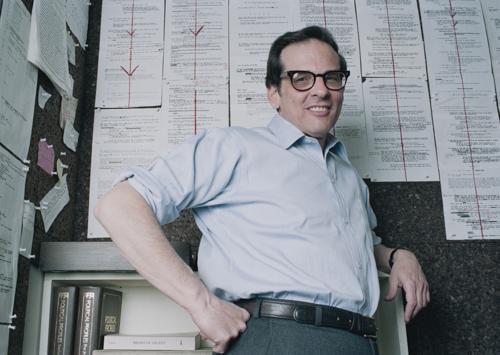
Robert Caro reads from and discusses his book "The Years of Lyndon Johnson"
Dec. 9, 1982 Discussing "The years of Lyndon Johnson, Vol 1: the path to power" with the biographer Robert Caro.
-
Robert Borisage and Richard Criley discuss secrecy vs. the Constitution
1975 Robert Borisage, founder of the Center for National Security Studies, and Richard Criley, part of the Alliance to End Repression, talk about government spying on citizens and the constitutionality of it. The pair talk about corruption in the CIA and FBI and how new laws can help curb the issues. They also explain the S.1 - Criminal Justice Reform Act 94th Congress (1975-1976).
-
Richard Reeves his book "A Ford, not a Lincoln"
Oct. 30, 1975 Richard Reeves his book "A Ford, not a Lincoln," about Gerald Ford and the politics of the 1970s. He also discusses journalism and White House reporting.
-
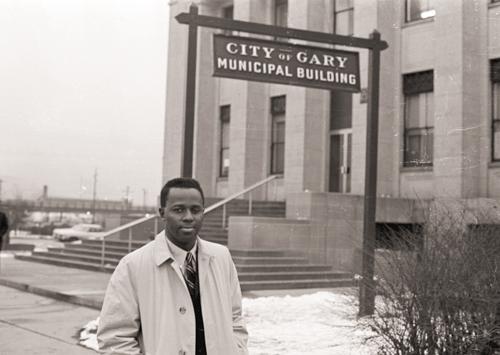
Richard G. Hatcher and Alexander Poinsett discuss Gary, Indiana, their book "Black Power: Gary Style," and politics
Jan. 18, 1971 Richard G. Hatcher and Alexander Poinsett discuss Gary, Indiana, their book "Black Power: Gary Style," politics, and race relations. They discuss the corruption in Gary, Indiana and Gary politics. Includes Richard G. Hatcher reading his old speech from his book "Black Power: Gary Style."