

-

Roger G. Kennedy in conversation with Studs Terkel
May. 6, 1986 Discussing the book "Architecture, Men, Women and Money in America, 1600-1860" (published by Random House) with the author, historian Roger Kennedy.
-
Roger G. Kennedy discusses his book "American Churches"
Jan. 18, 1983 According to Roger G. Kennedy's book, "American Churches," places of worship can also be organic expressions of the community. In the church, whether it be a temple or a cathedral, the architecture of the building itself should be inviting so that people will want to participate inside.*Please note: some sections have been edited out from the original recording due to copyright considerations
-
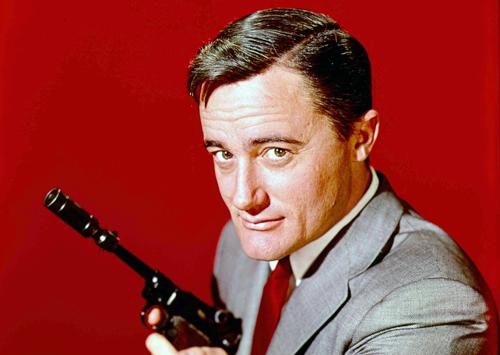
Robert Vaughn talks with Studs Terkel
1970 Robert Vaughn takes time out from his Drury Lane appearance in "Tender Trap" to discuss his new book "Only Victims" with Studs Terkel. The discussion spans the years 1938 when Martin Dies became the first House Committee on Unamerican Activities (HUAC) chairman to Vice President Spiro Agnew's condemnation of the "New York Times" and "Washington Post". Vaughn created the title of his book "Only Victims" from a Dalton Trumbo speech that reflected back on the era of HUAC as being one where there were no heroes, no villains, only victims.
-
Robert Twombly discusses the biography “Louis Sullivan: His Life and Work”
Mar. 24, 1986 Architectural historian Robert Twombly discusses the biography “Louis Sullivan: His Life and Work.” Referred to by Studs as the architect that most symbolizes Chicago architecture, Louis Sullivan, this program outlines Sullivan’s life as a prominent architect who was one of the first to incorporate nature, or "the organic", into architecture, and who ended his life in poverty. This program includes a clip from 1956 of Frank Lloyd Wright speaking to his contemporaries, indignant, asking what took them so long to recognize Louis Sullivan and his genius in the architectural field?
-
-
Robert Caro discusses his book "The Years of Lyndon Johnson: volume two: Means of ascent"
Apr. 23, 1990 Interviewing journalist and author Robert Caro about his book "The Years of Lyndon Johnson: volume two: Means of ascent," which details seven years of Lyndon Johnson’s life in the House of Representatives as he tries to climb the political ladder.
-
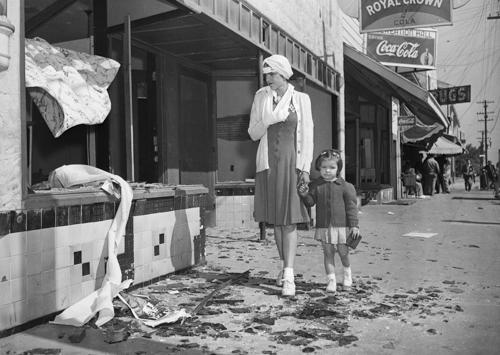
Robert Allen discusses his book "The Port Chicago Mutiny"
May. 12, 1989 On July 17, 1944, there was a huge explosion at Port Chicago in California. Of the 320 men on duty at the pier that died, 202 of them were Black. Robert Allen's book, "The Port Chicago Mutiny: The Story of the Largest Mass Mutiny Trial in U.S. Naval History," covers the story of poor working conditions, the explosion, work stoppage, the trial and the outcome. There is an excerpt of Joe Small, recalling what happened, when he was a sailor present there.
-
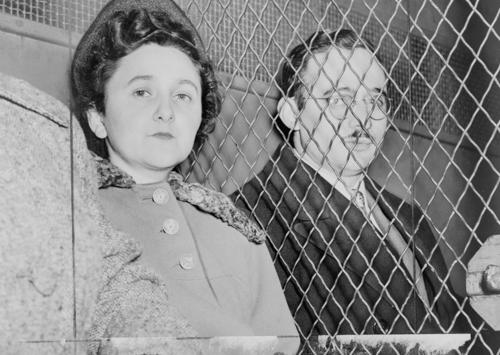
Rob Okun, Richard Fried, and Peter Novick discuss the exhibit “Unknown Secrets: Art and the Rosenberg Era”
Jun. 15, 1990 Historians and exhibit organizers Rob Okun, Richard Fried, and Peter Novick discuss the Spertus Museum’s exhibit “Unknown Secrets: Art and the Rosenberg Era.” Julius and Ethel Rosenberg were both convicted and executed in 1953 for participating in spy activity for the Soviet Union. Okun, Fried, and Novick discuss the Rosenberg case and the subsequent response from the public after the execution, many of whom felt the Rosenbergs were wrongfully convicted. The art in this exhibit captures the passion surrounding this case.
-
Richard Wang discusses Charles Mingus' "Epitaph"
Aug. 23, 1990 Jazz scholar and historian Richard Wang discusses Charles Mingus' "Epitaph", a 4,237 measure-long composition. Wang discusses Mingus’ upbringing and how he was trained on the trombone originally. Throughout the interview, performances of the Epitaph are played and Wang notes in the composition where listeners can hear Mingus’ classical training, as well as where other classical musicians, such as Duke Ellington and Claude Debussy, most likely were referenced as inspiration in the composition.
-
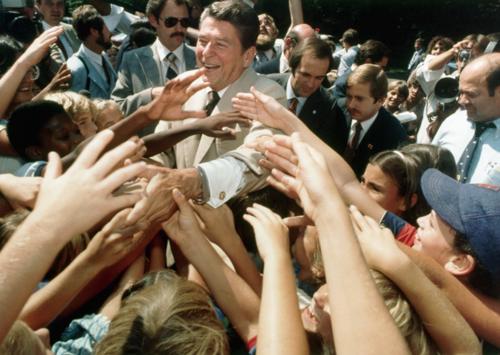
Richard Barnet discusses his book "The Rockets' Red Glare"
Feb. 20, 1990 According to Richard Barnet's book, "The Rockets' Red Glare: When America Goes to War: The Presidents and the People," most people kept to themselves and didn't talk to one another about anything. Barnet talks about how the government would use propaganda to get people interested and thus backing the government with going to war.
-
Richard and Patricia Waterman talk with Studs Terkel ; part 1
1953 Terkel interviews anthropologists Richard and Patricia Waterman. This interview is done in two parts.
-
Richard Carbray, Howard Schomer, Joseph Sittler and Gordon Zahn talk to Studs Terkel ; part 2
Jan. 18, 1965 Discussing "Father Roberts and Vatican III" and interviewing Richard Carbray, Howard Schomer, Joseph Sittler and Gordon Zahn
-
Richard Carbray, Howard Schomer, Joseph Sittler and Gordon Zahn talk to Studs Terkel ; part 1
Jan. 18, 1965 Discussing "Father Roberts and Vatican III" and interviewing Richard Carbray, Howard Schomer, Joseph Sittler and Gordon Zahn
-
Riane Eisler discusses her book, "Sacred Pleasure: Sex, Myth, and the Politics of the Body"
Jun. 26, 1995 Interviewing Riane Eisler, historian, sociologist, and author of the book, "Sacred Pleasure: Sex, Myth, and the Politics of the Body." Eisler discusses masculine and feminine stereotypes and the part they play in relationships. Content Warning: This conversation has the presence of outdated, biased, offensive language. Rather than remove this content, we present it in the context of twentieth-century social history to acknowledge and learn from its impact and to inspire awareness and discussion.
-
Riane Eisler discusses her book "The Chalice and the Blade: Our History, Our Future"
Mar. 3, 1988 Riane Eisler, anthropologist and historian, discusses the history of gender roles, religious influences, and cultural mythology.