

-

Elisabeth Schwarzkopf discusses her roles and interpretation ; part 1
Apr. 11, 1962 Studs Terkel talks with Elisabeth about her career in opera. She discusses her thoughts of her overall career.
-
Elisabeth Schwarzkopf discusses her role as The Marschallin in Der Rosenkavalier ; part 2
Nov. 2, 1960 Studs Terkel discusses with Elizabeth her her role as The Marschallin in Der Rosenkavalier. This interview is done in three parts.
-
Edward Said discusses the book "Covering Islam"
1980 Discussing the book "Covering Islam" with the author Edward Said.
-
Educator Harold Taylor talks with Studs Terkel ; part 2
1965 A short clip of Studs Interviewing educator Harold Taylor. The two briefly discuss what it would be like for the United States of America to use its resources in a way to become a "vast meeting ground of people," in which American citizens are exposed to a variety of the arts from different cultures in an effort to become a "teacher in the world."
-
Educator Harold Taylor talks with Studs Terkel ; part 1
1965 Harold Taylor and Studs look in-depth at the definition of what it means to be a "student," including on-campus protests, gaining life experience by teaching and challenging the mainstream social order. Includes a brief reading from Taylor's speech, "Preparation of American Teachers in the Field of World Affairs."
-
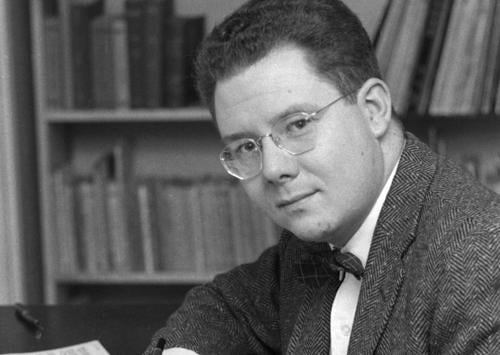
Easley Blackwood, Midwestern composer, pianist and educator at University of Chicago, discusses his music
Mar. 1, 1961 Studs and Mr. Blackwood discuss his musical theory of tonal composition, and Mr. Blackwood plays several excerpts of his piece "Chamber Work for Fourteen Winds" on the piano.
-
Easley Blackwood, Leonard Meyer and Ralph Shapey discuss the standards of composition in contemporary music, part 2
1965 In this round table discussion the three gentlemen - all composers, musicians, and educators - discuss with Studs contemporary music and the standards for defining a composition in music. In the second hour they discuss what level of knowledge of music a critic should have in order to form a proper opinion of music. All animatedly offer their opinion to both the pro and the con. A movement of both Blackwood and Shapey compositions is played.
-
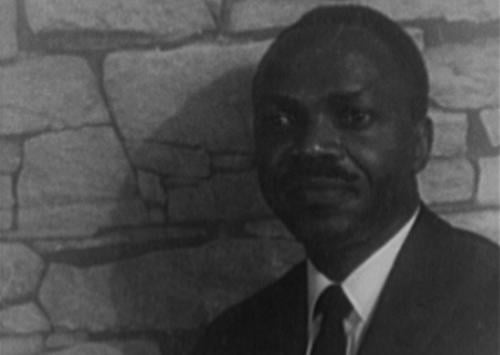
E.R. Braithwaite discusses his career and the book "Reluctant Neighbors"
1972 E.R. Braithwaite, Guyanese-born British-American novelist, writer, teacher and diplomat discusses his writing and career. The interview opens with Mr. Braithwaite, reading from his book "Reluctant neighbors".
-
-
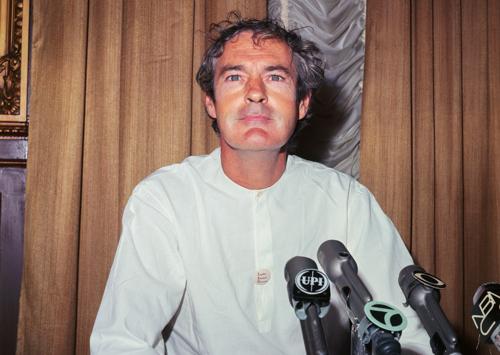
Dr. Timothy Leary discusses the stages of the psychadelic experience of turning on and his role as a Shaman ; part 2
Dec. 1, 1966 Studs interviews Dr. Timothy Leary about the three stages of the psychadelic experience: turning on, tuning in, and dropout. Leary discusses how his life changed from being a successful psychologist and professor at Harvard to renewing his life as a religious teacher. He shares how the drug LSD is used in the tribal communities who turn on and also explains the values of those who practice turning on. Leary also describes other methods used to turn on, which he considers a religious experience. Studs reads what Richard Goldstein said about Dr. Leary.
-
Dr. Samuel Floyd, Jr. discusses his book "The Power of Black Music: Interpreting Its History from Africa to the United States"
Feb. 21, 1996 Author Dr. Samuel Floyd discusses his projects in relation to black music and elements from his book "The Power of Black Music: Interpreting Its History from Africa to the United States." Includes an interview with Langston Hughes.
-
Dr. Samuel Floyd, Jr. discusses Black music, history, and culture
Oct. 11, 1990 Interviewing Dr. Samuel Floyd, author and scholar of Black music. He discusses prominent Black musicians and composers who shaped their perspective genres.
-
Dr. Samual Floyd talks with Studs Terkel
Mar. 17, 1988 Interviewing author and scholar of Black music Dr. Samuel Floyd, Jr.
-
Dr. Robert Coles reads from and discusses his book "The Call of Service"
Sep. 8, 1993 Dr. Robert Coles' book, "The Call of Service; A Witness to Idealism" came as a result of watching of his mother work tirelessly in soup kitchens, helping the less fortunate. Through his stories and experiences, Coles lets his audience know that one must put himself in others' shoes to truly help others.
-
Dr. M. Merchant discusses Shakespeare and the arts
Aug. 18, 1965 Welsh scholar Dr. M. Merchant speaks about Shakespeare and his impact on other arts and artists. Toward the end, there is an excerpt of Sir John Gielgud in Shakespeare's "Measure for Measure."*Please note: some sections have been edited out from the original recording due to copyright considerations