

-

Bertrand Russell discusses science and world peace. Phyllis Evans discusses the National Health Plan ; part 1
1962 Sir Bertrand Russell says scientists have a fundamental obligation to let the authorities know if and when what they're working on could lead to or cause a war. Russell claims, no matter the side, there are no winners as a result of war. The world could be a far better place, Russell explained, if it weren't for the fact of man's hatred toward other men. If one lives in the United States and has a grave illness or needs a major surgery, Phyllis Evans says one should not have to go into bankruptcy because of all the costs.
-
Berthold Spangenberg talks with Studs Terkel commenting and reflecting on Munich, Germany
1968 While in Munich, Studs speaks with Berthold Spangenberg about postwar cultural reconstruction of Germany through the lens of Spangenberg's mid-sized publishing house. Spangenberg notes international influences and regional variances among German cities and the significance of a divided Berlin. Terkel ends with musings on his travels in Germany.
-
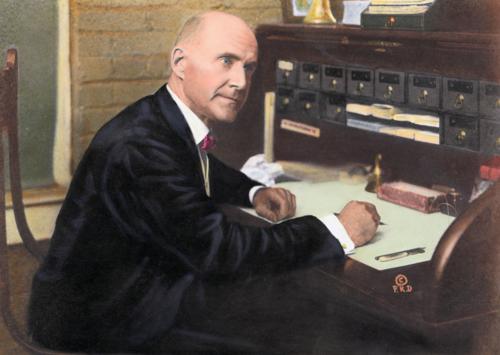
Bernard J. Brommel discusses his book "Eugene V. Debs: Spokesman for Labor and Socialism"
Oct. 6, 1981 Bernard J. Brommel discusses his book "Eugene V. Debs: Spokesman for Labor and Socialism."
-

Bernard Asbell discusses his book "The Plll"
Jun. 14, 1995 Scientists, women, birth control, religion and ethics are among the topics covered in Bernard Asbell's book, "The Pill: A Biography of the Drug that Changed the World"
-
-
-
-
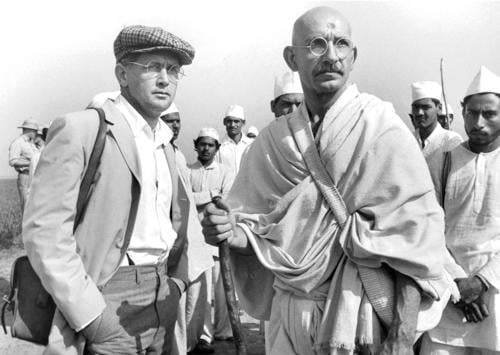
Beatrice Trum Hunter discusses her book "The Mirage of Safety"
Feb. 5, 1976 In her book, "The Mirage of Safety: Food Additives and Federal Policy, " Beatrice Trum Hunter warns the readers about the dangers of highly processed foods and chemical additives. By preparing a TV dinner, or a convenience food, Hunter says a person really doesn't save that much more time than they would by making a meal from scratch.*Please note: some sections have been edited out from the original recording due to copyright considerations
-
Basil Davidson discusses African history, culture and his book, "Lost Cities of Africa" with Studs Terkel ; part 1
1968 Studs interview with Basil Davidson, Africanologist, about his book, "Lost Cities of Africa." The interview takes place in Barnes, London. They touch on African culture, history, and civilization.
-
Basil Davidson discusses Africa and his book "Lost Cities of Africa," part 2
British historian and writer Basil Davidson discusses Africa and his book "Lost Cities of Africa," part 2. This recording also includes a discussion with Anne Graham Bell and Tony Mott about London's youth (recorded while Studs was in England) beginning at 00:20:14. Mott and Bell portion of the interview cuts off abruptly at the end.
-
Basil Davidson discusses Africa and his book "Lost Cities of Africa," part 1
British historian and writer Basil Davidson discusses Africa and his book "Lost Cities of Africa." Part 1. Part two of this recording also features Anne Graham Bell and Tony Mott discussing London's youth while Studs was in England. They are not included here, in part 1.
-
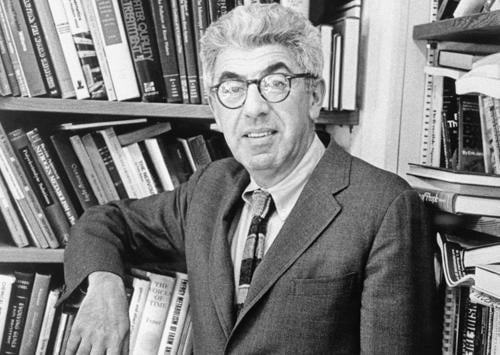
Barry Commoner discusses his book "The Poverty of Power: Energy and the Economic Crisis"
May. 20, 1976 Biologist and author Barry Commoner discusses his book "The Poverty of Power: Energy and the Economic Crisis."
-
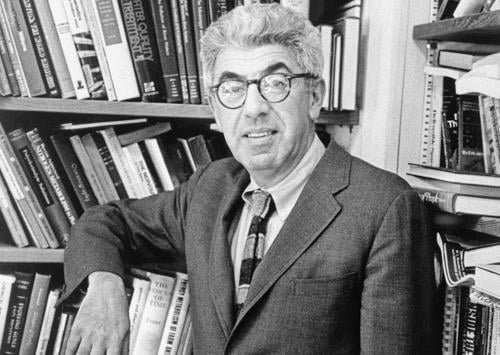
Barry Commoner discusses his book "The Politics of Energy"
Jun. 18, 1979 Scientist and educator Dr. Barry Commoner discusses his book "The Politics of Energy." Main topics include nuclear energy, solar energy, renewable energy and the future of energy.
-
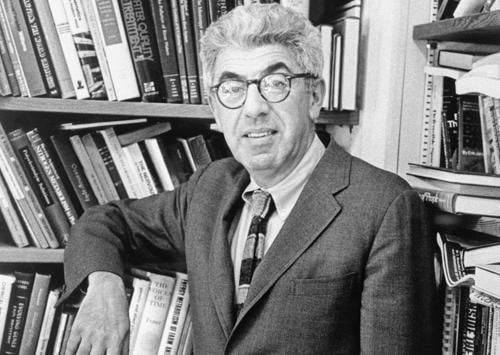
Barry Commoner discusses his book "Making Peace with the Planet"
Apr. 12, 1990 According to Barry Commoner's book, "Making Peace with the Planet," we, as the human species, are in and are witnessing a war between the ecosphere and the technosphere. Commoner explains that today's cars emit a lot of smog into the big cities. Trucks move consumer goods from place to place, using four times more fuel than trains. Everyone should ask themselves what is their interest in the quality of the environment and that of nature.
-
Barry Byrne discusses architecture of Chicago ; part 2
1970 Architect Barry Byrne talks about Chicago architecture and urban planning, including past architects Louis Sullivan and Frank Lloyd Wrigh. Byrne discusses how "form follows function," is no longer important to architects and warns that fashion should not be followed, because buildings are forever.