

-
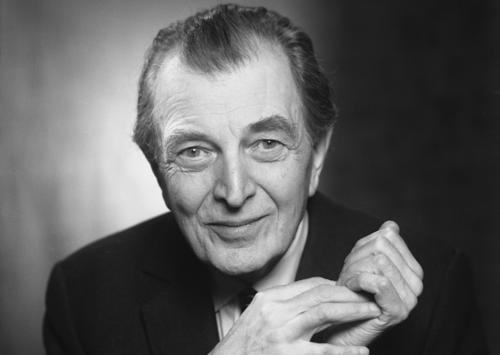
Alexander Tcherepnin discusses his career
Nov. 10, 1959 Russian composer Alexander Tcherepnin discusses his early upbringing, training, and composing bagatelles in Saint Petersburg, as well as the influence of his composer father, Benois family relatives, Russian/Asian/European cultural influence, electronic music.
-
Alexander Sutherland Neill discusses lying to children
1963 Alexander Sutherland Neill says no one should ever lie to a child because children are brutally honest. Neill says people tend to live their lives as a lie. Neill also points out that when someone comes knocking at the door, and one tells the child to tell that person that so and so is not home, adults are teaching their children about white lies. This is a very short interview that ends abruptly.
-

Alexander Frey in conversation with Studs Terkel
Feb. 3, 1997 Interviewing organist, pianist and conductor Alexander Frey.
-
Alexander Eliot discusses his book "Sight and Insight"
Mar. 14, 1959 In his book, "Sight and Insight," Alexander Eliot talks about having spent time in Spain and reflecting upon the masterpieces of art that he has studied and researched throughout his life. Eliot spoke of people being able to use their imagination and their mind's eye to fill in a piece of artwork if something were missing from it. Eliot explained, with one's insight, comes sight.
-
Alexander Cockburn discusses his book “The Fate of the Forest: Developers, Destroyers, and Defenders of the Amazon”
Nov. 20, 1989 Author and journalist Alexander Cockburn discusses his book “The Fate of the Forest: Developers, Destroyers, and Defenders of the Amazon.” Cockburn discusses the detrimental effects of deforestation not only on the environment, but for the indigenous groups, such as the Kayapo people, as well. Studs plays "Cancão Da Terra (Song of the Earth)" - Zelia Barbosa (1968).
-
-

Alex Kotlowitz discusses his book "There Are No Children Here"
Feb. 28, 1991 Discussing the book "There Are No Children Here: The Story of Two Boys Growing up in the Other America" with author Alex Kotlowitz. Includes excerpt from WFMT doumentary, "Born to Live".
-
-
Alex Coutts in conversation with Studs Terkel
May. 7, 1996 Terkel comments and presents musical performance of Yip Harburg songs
-
-
-
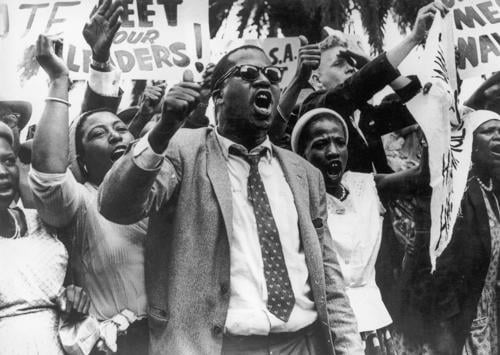
Albert John Luthuli discusses the struggle for democratic rule in South Africa
Mar. 1963 Albert John Luthuli, President of the African National Congress, Nobel Peace Prize winner, and Zulu Chief, discusses politics of South Africa. The interview includes discussions about his early life and education, and his teaching career, becoming chief of the Zulus, and working as the President of the African National Congress. He also explains his thoughts on peaceful methods of fighting against discrimination and apartheid in South Africa.
-
Albert Finney, Ronald Harwood in conversation with Studs Terkel
Mar. 7, 1991 Discussing the play "Another Time," with playwright Ronald Harwood and actor Albert Finney.
-
Albert Alvarez discusses his book "Beyond All This Fiddle: Essays, 1955-1967;" part 2
1972 Albert Alvarez, poet, writer and critic, discusses how technology advancement is changing society. Specifically he discusses war in general, the Holocaust and advancements in destructive weapons. "Beyond All This Fiddle: Essays, 1955-1967."
-
Albert Alvarez discusses his book "Beyond All This Fiddle: Essays, 1955-1967," [part 1] and Jack LaPorte [part 2]
1972 Part 2 of a discussion with Jack LaPorte while Studs was in England. Conversation cuts out at 05:06 and begins the coversation with Al Alvarez. Albert Alvarez, poet, writer and critic, discusses how technology advancement is changing society. He specifically discusses war in general, the Holocaust and advancements in destructive weapons. He speaks fondly of Sylvia Plath, and discusses his current book, "Beyond All This Fiddle: Essays, 1955-1967."