

-

Blanche Wiesen Cook discusses her book, "The Declassified Eisenhower: A Divided Legacy of Peace and Political Warfare"
Aug. 6, 1981 Blanche Wiesen Cook, historian, professor, and author discusses her book, "The Declassified Eisenhower," and explains Eisenhower's peace and war beliefs. She describes his beliefs at the end of World War II and his relationships with fellow generals and leaders.
-
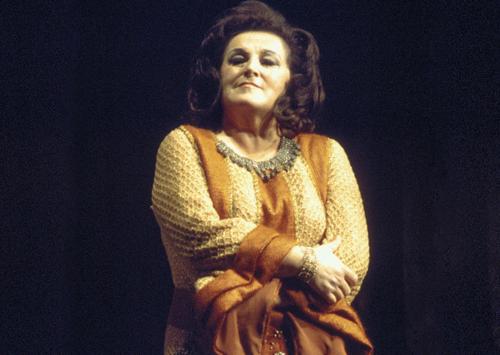
Birgit Nilsson talks about her career and her roles
Oct. 4, 1972 Birgit Nilsson talks about her career and her roles with musical interludes.
-
Birgit Nilsson during her time playing Leonore in Fidelio at the Lyric Opera of Chicago ; part 2
Nov. 15, 1961 Studs Terkel interviews Birgit Nilsson about her role Leonore in Fidelio at the Lyric Opera. This is an inverview done in two parts.
-
Birgit Nilsson during her time playing Leonore in Fidelio at the Lyric Opera of Chicago ; part 1
Nov. 15, 1961 Studs Terkel interviews Birgit Nilsson during her time playing Leonore in Fidelio.
-
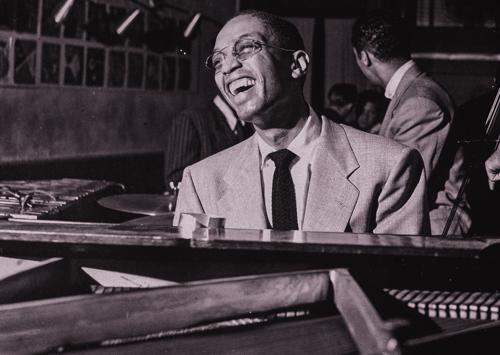
Billy Taylor discusses the role of playing jazz, being creative in your music, and the expansion of the Jazz Mobile
Aug. 28, 1980 Studs interviews Billy Taylor (Jazz pianist and commentator for Jazz Alive radio program), who discusses the creativity of jazz musicians, the Jazz Mobile, and relationships between musicians. Taylor also mentions a large variety of Jazz musician influences. Studs plays various pieces of Jazz from a diverse pool of musicians. Taylor provides details about the Jazz Mobile's traveling show and education of Jazz music. There are no music recordings in this edited version.
-
Billy Taylor discusses the people and music that influenced his career as a jazz composer and pianist
Aug. 24, 1977 Studs interviews Billy Taylor about his performance at the Rick's Cafe at the Holiday Inn in Chicago. They discuss what has influenced Billy Taylor's jazz music. Taylor explains some of his work with various other jazz musicians. This edited version does not include the music recordings.
-
Billy Taylor discusses the Jazz Mobile and the people who have influenced Jazz music
1970 Studs interviews Billy Taylor about his career in Jazz. Taylor shares stories about other Jazz musicians who influenced him. They discuss the improvisation in Jazz music, drug addiction of musicians, and the work Taylor is doing with the Jazz Mobile. Taylor discusses the different sounds of Jazz and describes the White House Jazz Festival that President Jimmy Carter hosted. This edited version does not include the music that is in the original version.
-
Bill Veeck Jr. discusses baseball
Feb. 17, 1981 Content Warning: This conversation has the presence of outdated, biased, offensive language. Rather than remove this content, we present it in the context of twentieth-century social history to acknowledge and learn from its impact and to inspire awareness and discussion. Former Chicago White Sox owner Bill Veeck Jr. reminisces about baseball and the American way of life.
-
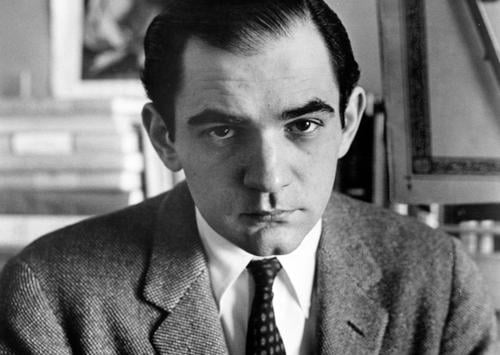
Bill Russo discusses his commedia dell'arte production
Jul. 26, 1974 Bill Russo talks about the commedia dell'arte production being staged at the Center for New Music at Columbia College Chicago. The production includes two pieces, "Pedrolino's Revenge" and "Isabella's Fortune".
-
Bill McKibben discusses his book "The End of Nature"
Oct. 13, 1989 Bill McKibben, author and environmentalist discusses his book "The End of Nature." McKibben talks about climate and weather, greenhouse gasses, fossil fuels, chlorofluorocarbons, and carbon dioxide. He also explains how climate change could damage the ecosystems including birds. He ends the interview discussing what can be changed such as solar power.
-
Bill Mauldin reads from and discusses his book "The Brass Ring"
1970 As a teenager growing up, Bill Mauldin thought he’d be an airline pilot or a submarine captain. He didn’t have ambitions to be a cartoonist until he realized that drawing was the one thing he was good at. Mauldin’s book, “The Brass Ring: A Sort of Memoir,” covers his background, his influences, and stories from time spent in the Army.*Please note: some sections have been edited out from the original recording due to copyright considerations
-
-
Bill Leonard discusses the history of baseball and baseball today
Apr. 1, 1971 The game of baseball today is very different from when Bill Leonard was a young boy. Today, the last names of baseball players are on the backs of their uniforms. When Leonard was a boy, his father would tell him who was up to bat solely by the player's walk or his stance. The selling of players' contracts to other teams is when Leonard believes the business of baseball changed. This recording includes snippets of author Lawrence Ritter's interviews with early 20th century ballplayers Sam Crawford, Goose Goslin, Fred Snodgrass, Rube Marquard, and Chief Meyers.
-
Bill Leahy discusses his views on the political and social struggles in the Republic of Ireland and Northern Ireland
Oct. 20, 1975 Studs interview with Irishman, Bill Leahy, on the political complexities surrounding Ireland in the 1960s-1970s. Leahy provides some historical background of the IRA and British colonial occupation of Ireland. They discuss Irish music, the Civil Rights Movement in Ireland, and contemporary myths about Ireland. Several Irish songs were played, but many of the titles were not captured. Planksty's music was played twice.
-
Bill Cunningham discusses court cases he has participated in
Jan. 5, 1979 Bill Cunningham, Jesuit priest and lawyer, discusses some court cases he has participated in. He talks about the Berrigan Brothers who protested against the Vietnam War. Cunnginham also talks about the Rice-Poindexter case, where two Black Panther Party members were charged for murder. He also discussed the Freedom of Information Act and the COINTELPRO the FBI's Counter Intelligence Program. Studs reads poetry from David Rice and plays a song by Hank Ferguson.