

-

Charles Hardin discusses his book, "Presidential Power and Accountability: Toward a New Constitution"
Jun. 26, 1974 Charles M. Hardin, political science professor, discusses his book, "Presidential Power and Accountability: Toward a New Constitution." Hardin discusses presidents from Roosevelt to Nixon and explores political parties and the Constitution and the role both play in the American Government. He explains his studies in political science and how he has come to believe that the Constitution should be re-written and creating more political parties could limit presidential powers, which he believes could cause problems in the future.
-
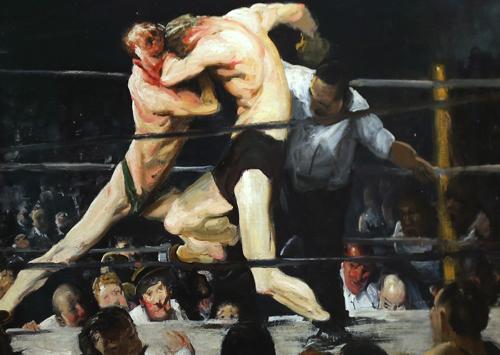
Charles Grant discusses George Bellows, and Captain Herbert Anderson discuss life on a tugboat
Jun. 19, 1962 Charles Grant discusses painter George Bellows; also includes anecdotes about his life, including being the first passenger on an airplane and meeting Buffalo Bill. Captain Herbert Anderson's conversation begins at 34:44.
-

Charles Eames discusses his life of travel and his study of design and architecture, part 2
Oct. 1, 1965 Charles Eames an architect, designer, artist, filmmaker and student of human nature talks with Studs about his years of travel in India and Europe. He discusses studying architecture and working as an architect and the nature of his film making.
-

Charles Eames discusses his life of travel and his study of design and architecture, part 1
Oct. 1, 1965 Charles Eames, an architect, designer, artist, filmmaker and student of human nature, talks with Studs about his years of travel in India and Europe. He discusses studying architecture and working as an architect and the nature of his film making. (Part 1 of 2)
-
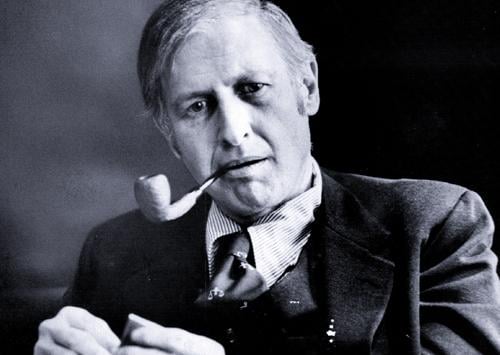
Charles E. Silberman and his wife Arlene Silberman discuss education
Sep. 15, 1970 Charles E. Silberman and his wife Arlene Silberman discuss education and Charles Silberman's book "Crisis in the Classroom". Includes a clip of Studs Terkel interviewing a student.
-
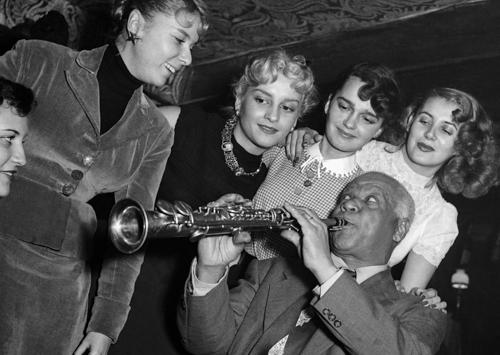
Charles Delaunay discusses jazz
1962 Talking about jazz with Charles Delaunay at the Hotel Pas de Callais in Paris.
-
Charles Delaunay and André Réwéliotty discuss jazz
May. 1, 1960 Charles Delaunay, jazz expert, and André Réwéliotty, jazz musician, talk about Jazz. Sidney Bechet, mentor of André Réwéliotty, is discussed at length. The two also debate the popularity of classic jazz compared to modern jazz as the genre develops.
-
Charles Dance discusses his acting work
1980 Charles Dance, English actor, talks about his work in the British TV show "The Jewel in the Crown," based on the novel series, "The Raj Quartet," by Paul Scott. Dance also discusses his work on the play, "Thunder Rock" and film, "Plenty," and the TV shows, "The Secret Servant," and "Rainy Day Women."
-
Charles Capen McLaughlin discusses landscape architect Frederick Law Olmsted
Jun. 27, 1977 Historian Charles Capen McLaughlin discusses landscape architect Frederick Law Olmsted and how Olmsted worked to create spaces where the working class could enjoy nature in industrialized areas. Studs plays "Whose Garden Was This" - Tom Paxton (1970) and "Tapestry" - Don McLean (1970).
-

Charles and Sylvia Fischer and Robert Weissbourd talk with Studs Terkel
Jun. 19, 1975 Charles and Sylvia Fischer and Robert Weissbourd discuss their time spent living and working in China.
-
Charlemae Hill Rollins discusses and reads from her book "The Christmas gif'"
1970 Charlemae Hill Rollins and Studs Terkel read from "The Christmas Gif" and discuss it's importance in African American literature. The book is an anthology of Christmas poems, songs, and stories, written by and about Negroes, and compiled by librarian Charlemae Hill Rollins. The book was first published in 1963.
-
Charlayne Hunter-Gault discusses her book "In My Place"
Jun. 3, 1995 Charlayne Hunter-Gault's book, "In My Place," offers Hunter-Gault's experiences with history, namely her being one of only 2 Black students that were allowed to go to the University of Georgia. She talks about liberation and freedom and she recalls what it would have been like for her ancestors to struggle .
-
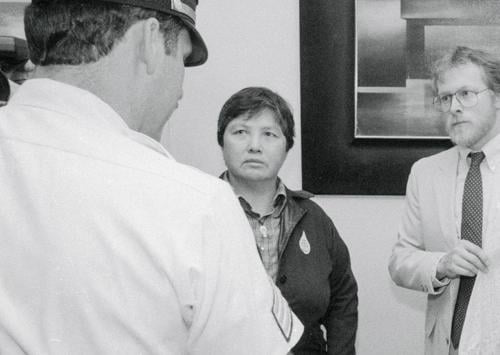
Charito Planas discusses his testimony before the U.S. Congress
Aug. 21, 1981 Discussing with Charito Planas his testimony before the U.S. Congress: "On the Withdrawal of U.S. Bases from the Philippines."
-
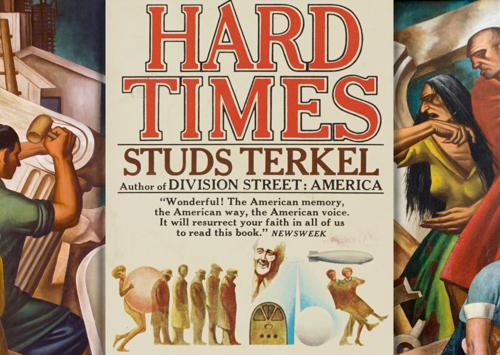
Chapter 2 of 13 of "Hard Times: Voices of the Great Depression" [includes introduction by Studs]
1971 Terkel comments and presents Hard Times: an oral history of the great depression
-
Chanticleer discusses the group's history and music
Feb. 24, 1994 Terkel comments and presents the music of Chanticleer, an acapella ensemble, comprised of 12 all male voices. Chanticleer discusses the following: the group vocal composition; the groups history; various recordings; and their influences. Chanticleer performs the following songs live on air: "Benedicamus Domino", "If Ye Love Me", "O Sacrum Convivium", "Nude Descending a Staircase", "When I Fall in Love", "Jesus Met the Woman at the Well", and "Magnificat a 12".