

-

Dan McCarthy and Max Smith discuss gay rights
Oct. 1, 1979 Dan McCarthy and Max Smith discuss their lives including the differences between growing up gay in different races. They also discuss religion, employment and housing issues they have encountered. Part of an earlier interview with Henry Weimhoff is played.
-
Dan La Botz in conversation with Studs Terkel
Aug. 26, 1991 Discussing the book "Rank and File Rebellion: Teamsters for a Democratic Union" (published by Verso) with the author, labor activist and historian Dan La Botz.
-

Dan Berman and Bob Fowler discuss death on the job
Mar. 29, 1979 Discussing death on the job with Dan Berman and Bob Fowler.
-
-
Dalton Trumbo reads from and discusses his book "Additional Dialogue ; part 1
Nov. 27, 1970 In his book, "Additional Dialogue: Letters of Dalton Trumbo, 1942-1962," Dalton Trumbo gives his audience a better understanding of why he was believed to have been warty, abrasive and stubborn. Trumbo believed people have the right to silence and they have the right to speak. He was angered when a book review was written about one book but another author's book was ignored. Trumbo spent time in prison where he was not allowed to write anything negative about the living conditions.
-
Dalton Trumbo reads from and discusses his book ; part 2
Content Warning: This conversation includes racially and/or culturally derogatory language and/or negative depictions of Black and Indigenous people of color, women, and LGBTQI+ individuals. Rather than remove this content, we present it in the context of twentieth-century social history to acknowledge and learn from its impact and to inspire awareness and discussion. Resuming the conversation with regards to his book, "Additional Dialogue: Letters of Dalton Trumbo, 1942-1962," Dalton Trumbo now talks about his time after being in prison for 10 months.
-
Dale Clevenger discusses his career as a Jazz musician and member of the Chicago Symphony Orchestra
Nov. 29, 1977 Studs interviews Dale Clevenger about his music with the Chicago Symphony and his jazz group, Ears, playing at Orphans in Chicago. They discuss the improvisation of Jazz and Bach. Clevenger mentions various Jazz musicians and their style. The music is removed from this edited version of the original recording.
-
Dale Clevenger discusses his career as a Jazz musician and member of the Chicago Symphony Orchestra
May. 13, 1980 Studs interviews Dale Clevenger about his music with the Chicago Symphony and his jazz group, Ears, playing at Orphans in Chicago. Clevenger discusses his work with the symphony. He explains why he credits David Amram for his interest in Jazz music. He names artists like Billie Holiday, Jack Teagarden, and Clark Terry as musical influences in his life. The music is removed from this edited version of the original recording.
-
Cyrus Colter reads from and discusses his novel, "The River of Eros"
Jun. 30, 1972 Set on the South Side of Chicago in 1971, Cyrus Colter's novel, "The River of Eros," is the story of Clotilda and her two grandchildren. Colter said Clotilda was very similar to the matriarchal roles of the women living in the deep South. *Please note: some sections have been edited out from the original recording due to copyright considerations
-
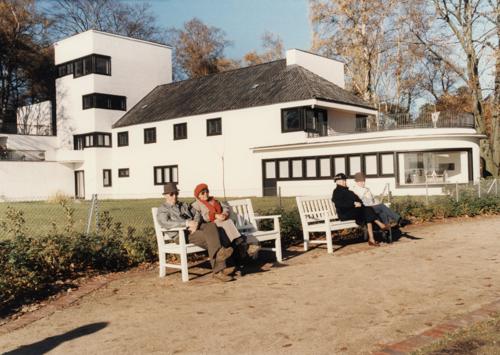
Cranston Jones talks about his book, "Architecture Today and Tomorrow" ; part 2
1961 Cranston Jones discusses the idea of architecture as art, historic architecture ideals, and the future of architecture.
-
Cranston Jones talks about his book "Architecture Today and Tomorrow" ; part 1
1961 Cranston Jones discusses the architects Frank Lloyd Wright, Le Corbusier, and Walter Gropius.
-
-
Cornell Capa discusses his book "Concerned Photographer"
Feb. 27, 1974 According to Cornell Capa, the best pictures of his book "Concerned Photographer" are the ones that deal with overpopulation. Capa hoped to make people aware of what's going on in the world and he further hoped people would do something about what they saw in the photographs.*Please note: some sections have been edited out from the original recording due to copyright considerations
-
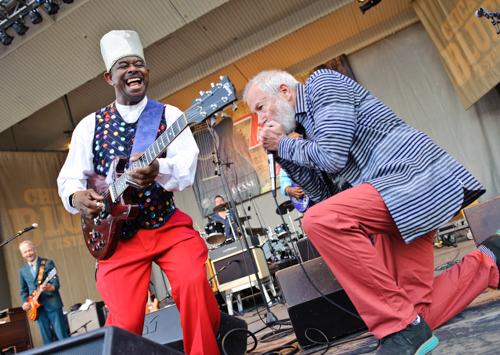
Corky Siegel and members of his ensemble the West End String Quartet discuss chamber blues
Oct. 15, 1996 Terkel interviews Corky Siegel and the West End String Quartet. Corky Siegel and the West End String Quartet also performs during the broadcast. They also discuss the musical genre of chamber blues.
-
Conversation with dance historian Ann Barzel
Jan. 23, 1996 Interviewing dance historian Ann Barzel.