

-

Daniel Yergin discusses his book, "Shattered Peace: The Origins of the Cold War and the National Security State"
1970 Daniel Yergin, author and economic historian, discusses his book, "Shattered Peace: The Origins of the Cold War and the National Security State." He explains the key players in the Cold War and his thoughts on the Yalta and Riga Axioms. Yergin also explores the end of World War II and other events that led to the tensions between US and the Soviet Union.
-
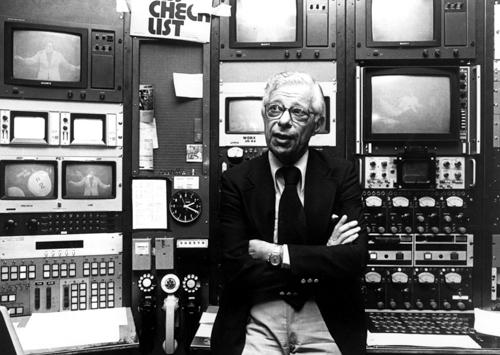
Daniel Schorr discusses his memoir "Clearing the Air"
Nov. 18, 1977 Daniel Schorr discusses his work in television and print journalism and the limitations of each. Topics of discussion include Schorr’s experiences working for CBS, reporting on and from the Soviet Union, and censorship in the news media. Schorr reads excerpts from his memoir at the beginning and end of the program.
-
-
Daniel Jonah Goldhagen discusses his book "Hitler's Willing Executioners"
Apr. 30, 1997 Who were these ordinary people who killed and what made them do what they did are among the questions answered in Daniel Goldhagen's book, "Hitler's Willing Executioners: Ordinary Germans and the Holocaust". Jews were in league with the devil and their alleged evil came from their biology. It was believed, for the good of the country, to get rid of the German threat, the Jews had to be exterminated, according to Goldhagen.
-
Daniel Ellsberg Discusses the publication of "The Pentagon Papers" ; part 1
1980 Daniel Ellsberg, political activist and former military analyst, discuses his release of the Pentagon Papers and his thoughts on how the Vietnam War played out. He also discusses what he believes the next war could look like and how America, and the world, would be affected by nuclear war.
-
Daniel Ellsberg discusses the Pentagon Papers
Sep. 7, 1972 *Please note: some sections have been edited out from the original recording due to copyright considerations
-
Daniel Ellsberg discusses nuclear warfare and its worldwide impact
Feb. 14, 1994 Interviewing former government official, Vietnam War opponent, and political activist Daniel Ellsberg. Program includes an excerpt of a 1980 interview with Ellsberg. Includes a test tone lasting about 20 seconds. Content Warning: This conversation has the presence of outdated, biased, offensive language. Rather than remove this content, we present it in the context of twentieth-century social history to acknowledge and learn from its impact and to inspire awareness and discussion.
-
Daniel Ellsberg discusses his family and his beliefs about the hydrogen bomb ; part 2
Dec. 31, 1979 Daniel Ellsberg, political activist, discusses the creation and use of the atomic and hydrogen bombs. He discusses his family including how his son helped him leak the Pentagon Papers and has since protested with him, including being jailed. He also talks about his father who quit his job over the creation of the hydrogen bomb and how his father's choice helped him to decide to release the Pentagon Papers.
-
Daniel Duell discusses his work with Ballet Chicago
Jun. 9, 1988 Interviewing Daniel Duell, choreographer and artistic director of Ballet Chicago. He discusses his career, ballet techniques, and men in ballet. Includes a 30 second testing tone. Content Warning: This conversation has the presence of outdated, biased, offensive language. Rather than remove this content, we present it in the context of twentieth-century social history to acknowledge and learn from its impact and to inspire awareness and discussion.
-
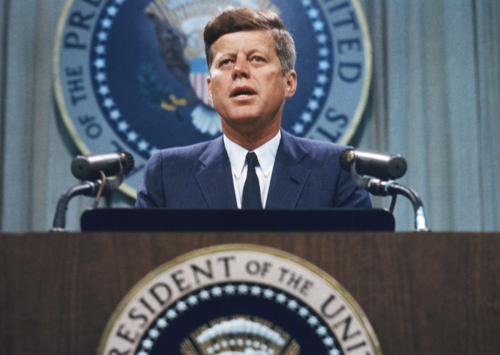
Daniel Boorstin discuses his book "The Image: A Guide to Pseudo-Events in America"
1960 Discussing the book "The Image: A Guide to Pseudo-Events in America" and interviewing the author Professor Daniel Boorstin.
-
Daniel Bluestone discusses his book “Constructing Chicago”
Nov. 13, 1991 Daniel Bluestone, architectural historian, discusses modern architecture and the endurance and legacies of 19th century designs in Chicago. Includes a 20 seconds test tone.
-
Dan Wakefield discusses his book “Supernation at Peace and War”
1960 Writer Dan Wakefield discusses his book “Supernation at Peace and War” with Studs Terkel. Further discussion is had over civil unrest, draft dodging, and social injustices during the Vietnam War.
-
Dan Wakefield discusses his book “Between the Lines”
1967 Writer Dan Wakefield discusses his book “Between the Lines,” his relationship with C. Wright Mills, and his career. Wakefield reads the epigraph from his book.
-
Dan Tucker discusses his opera writings and Sasha Gerritson, David Richards, and David Laub discuss their works
Jun. 18, 1997 Studs interviews Chicago Tribune reporter turned opera composer, Dan Tucker. He discusses how his music was inspired by poets Federico García Lorca and William Shakespeare and authors Peter S. Beagle and Christopher Fry. Sasha Gerritson, soprano and founder of the L'Opera Piccola opera troupe, David Laub, bass baritone, and David Richards, L'Opera Piccola music director and pianist are in studio and talk about their work and thoughts on the opera songs.
-