

-

Young men talk with Fred Christy; Earl talks with Studs Terkel ; speech and singing at a meeting
1968 Studs Terkel interviews Fred Christy about how he hopes to change the young lives of African-American. He also travels with Fred to places of African-American community.
-
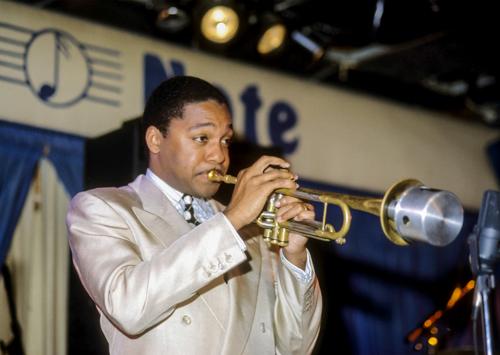
Wynton Marsalis discusses his musical upbringing
Nov. 5, 1985 Terkel comments and presents a musical performance by Wynton Marsalis
-
Willie Dixon and Koko Taylor discuss the blues and how you create blues music
1982 Studs interviews Willie Dixon and Koko Taylor about the blues. They discuss their song "Insane Asylum" and their work together. Dixon uses his song "Little Red Rooster" to help explain how the blues are created from life experiences. Taylor reflects on singers like Willie Dixon, Memphis Minnie, and others who influenced her desire to sing the blues. Taylor also discusses European audiences and blues influence there. The musical numbers are removed from this edited version of the original recording.
-
-
William Brashler talks about his book "Bingo Long's Traveling All-Stars and Motor Kings"
Dec. 10, 1973 Mr. Brashler converses with Studs about his research for the novel and the players he had spoken with to gather information for the book. The novel tells the story of a baseball team that revolts from a tyrannical Negro League owner and spends the 1939 season barnstorming around the Midwest. Includes two excerpts of a Cool Papa Bell interview talking about their travel as "barnstormers". Studs and Mr. Brashler read several exchanges of dialogue from the book.
-
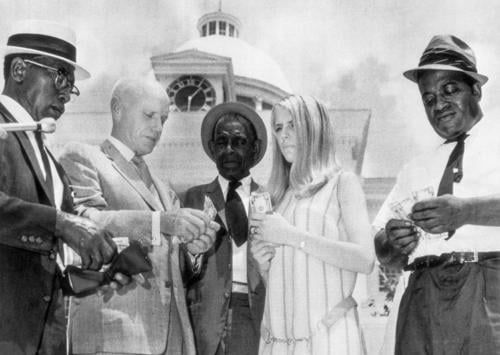
William Bradford Huie talks with Studs Terkel
Mar. 29, 1967 William Bradford Huie discusses his novel The Klansman. Includes recordings of interviews from Rev. Paschal Carlton, an unknown Alabama cab driver, and an unknown woman of Birmingham, Alabama.
-
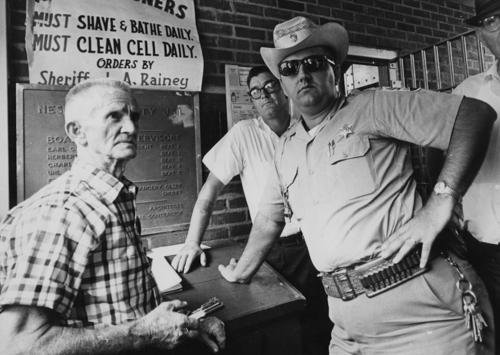
William Bradford Huie discusses his book "Three Lives for Mississippi"
May. 20, 1965 Author William Bradford Huie discusses his book "Three Lives for Mississippi;" reads passages from book.
-
Will D. Campbell discusses his book "Providence"
Aug. 26, 1992 Content Warning: This conversation includes racially and/or culturally derogatory language and/or negative depictions of Black and Indigenous people of color, women, and LGBTQI+ individuals. Rather than remove this content, we present it in the context of twentieth-century social history to acknowledge and learn from its impact and to inspire awareness and discussion. Will D. Campbell, minister, activist, and author of “Providence," discusses religion, civil rights, and American history.
-
Will Campbell discusses his book “Forty Acres and a Goat: A Memoir”
Feb. 13, 1987 Preacher Will Campbell discusses and reads from his book “Forty Acres and a Goat: A Memoir” and recounts his experience during the Civil Rights movement in the South. Studs plays “His Eye Is On The Sparrow” - Mahalia Jackson (1958).
-
Wallace Terry reads from and discusses his book "Bloods: An Oral History of the Vietnam War by Black Veterans"
Sep. 26, 1984 Content Warning: This conversation includes racially and/or culturally derogatory language and/or negative depictions of Black and Indigenous people of color, women, and LGBTQI+ individuals. Rather than remove this content, we present it in the context of twentieth-century social history to acknowledge and learn from its impact and to inspire awareness and discussion. Wallace Terry felt it was an important mission to tell people about the Black men who fought in Vietnam. There are stories from 20 men.
-
Virginia Collins discusses her family and social justice issues
1970 Virginia Collins said her grandfather believed if the parish communities could afford to provide a white teacher for white school children, then the parishes of Black communities must do the same for the Black children. Collins also talks about her son Walter's legal case and his being in jail for violating six counts of induction to the army.*Please note: some sections have been edited out from the original recording due to copyright considerations
-
Virgil Thomson discusses his career as a music composer for opera and film
Jul. 24, 1973 Studs interview with Virgil Thomson about his career as a music composer. Thomson shares his work with Gertrude Stein in operas "Mother of Us All" and "Four Saints In Three Acts." He discusses his preference for black artists. Thomson describes his work in documentary films such as "Plow That Broke the Plains." He also shares information about the cajun music "Squeeze Box" in the film "Louisiana Story." This edited version does not include the music pieces.
-
-
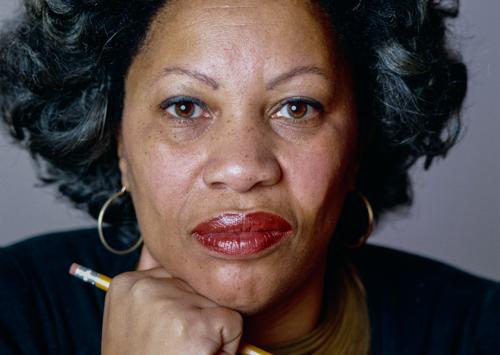
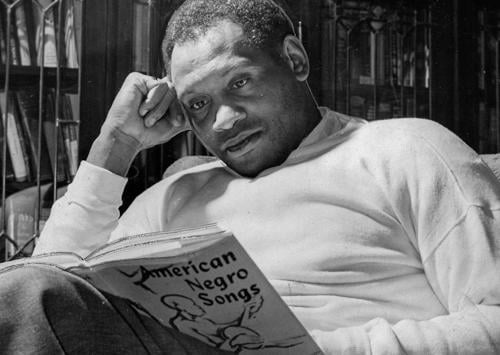
Toni Morrison reads from and talks about her book "Sula"
Apr. 16, 1974 Studs Terkel interviews writer Toni Morrison. This interview begins with a reading from the book, "Sula" by Morrison Morrison continues to read excerpts from her novel "Sula" and discusses her literature.
-
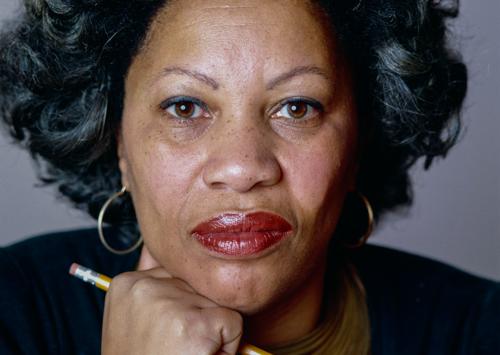
Toni Morrison discusses her book "Song of Solomon"
Oct. 7, 1977 Toni Morrison talks about her books and themes of memory, excessive love, possession, and recovery. It includes an excerpt from an interview with Emanuel Dunn.