Main navigation

  • Home
  • Explore
  • Interact
      • Clips Explore themed playlists of audio clips from the Archive.
      • Reuse Listen to creative reuses of Studs’ interviews.
      • Remix Combine audio from the Archive to create entirely new works.
  • Podcast
  • Classroom
  • Donate

00 / 00

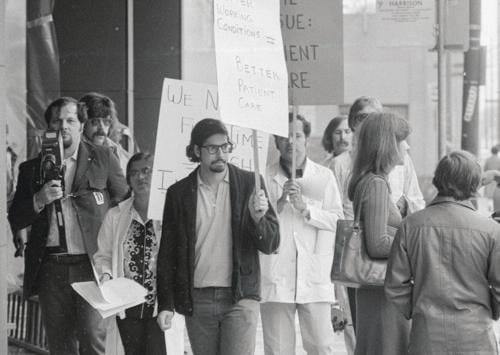
Medical personnel

  • Edward de Bono discusses his book “The Five-Day Course in Thinking” ; part 2

  • Rev. Will D. Campbell in conversation with Studs Terkel

    Feb. 1, 1978
  • Oliver W. Sacks discusses deaf experiences as detailed in his book "Seeing Voices"

    Oct. 26, 1990
  • Studs Terkel

    Terkel comments and presents "Hard Times: an Oral History of the Great Depression"; chapter 6

    1971
  • Interview with Dr. Robert Coles

    Jun. 2, 1978
  • Interview with Dr. Bruno Bettelheim

    1980
  • Interview with Eugene C. Kennedy

    Mar. 27, 1981
  • Dr. Samuel Epstein discusses his book, "Hazardous Waste in America"

    Mar. 14, 1983
  • Carl Charnett, Director of Gateway House, and residents ; part 2.1

    1970
  • Interviewing Anthony Storr

    Jun. 8, 1989
  • Dr. Bertram Carnow and Bob and Joan Ericksen

    Dr. Bertram Carnow and Bob and Joan Ericksen discuss occupational illnesses and pollution

    Nov. 21, 1974
  • Rory Gilbert and Nikki Nelson discuss battered wives and family abuse

    Jul. 28, 1981
‹‹
of 15
››
Major Support Provided By
The Becca Kopf Memorial Circle of Friends
WFMT Radio Network & Chicago History Museum

This site is being managed by WFMT in partnership with the Chicago History Museum.

Library of Congress

In-kind digitization services of the Studs Terkel Radio Archive are provided by the Library of Congress.

National Endowment for the Humanities

The Studs Terkel Radio Archive has been made possible in part by a major grant from the National Endowment for the Humanities: Exploring the human endeavor.

Studs Terkel Radio Archive

All Programs About The Archive About Studs Supporters Contact

©2026 WFMT Radio Network | Site by Jell Creative

Any views, findings, conclusions, or recommendations expressed in this web resource do not necessarily represent those of the National Endowment for the Humanities.