Listen to New Voices on Studs Terkel our partnership with 826CHI-here! Read the Story


Showing 751 - 765 of 777 results
-

Allen Ginsberg discusses poetry and meditation
Nov. 29, 1976 Studs Terkel and Allen Ginsberg talk about poetry, meditation, and the shifting of American socio-political consciousness between the 50's and 70's.
-
Allan Ryan discusses his book "Quiet Neighbors: Prosecuting Nazi War Criminals in America"
Jan. 29, 1985 Allan A. Ryan, former Director of the Department of Justice's Office of Special Investigations, speaks about his book on the investigation and prosecution of Nazi war criminals in the United States. Ryan says that after WWII, Nazi collaborators and war criminals fled prosecution under the guise of fleeing the threat of communism. Ryan worked on the investigations of prominent war criminals like Ivan the Terrible and John Demjanjuk, and he discusses how he successfully worked with the Soviet Union to obtain crucial evidence located within the USSR for these trials.
-
Allan Chase discusses "The Legacy of Malthus"
Apr. 25, 1977 Discussing the book "The legacy of Malthus" with the author Allen Chase.
-
Allan Berube discusses his book "Coming Out Under Fire"
Apr. 30, 1990 The military's attitude toward gay people is what's covered in Allan Berube's book, "Coming Out Under Fire: The History of Gay Men and Women in World War II." For some people, hiding their true identity was necessary because they would have been discharged by the military.
-
Alistair Cooke discusses his book "Alistair Cooke's America"
Oct. 30, 1974 Discussing the book "Alistair Cooke's America" and interviewing the author Alistair Cooke.
-
-
Alfred McCoy discusses heroin trafficking; part 2
1971 Alfred McCoy discusses the history of heroin trafficking within the context of American foreign policy.
-
Alfred McCoy discusses heroin trafficking; part 1
1971 Alfred McCoy discusses the history of heroin trafficking within the context of American foreign policy.
-
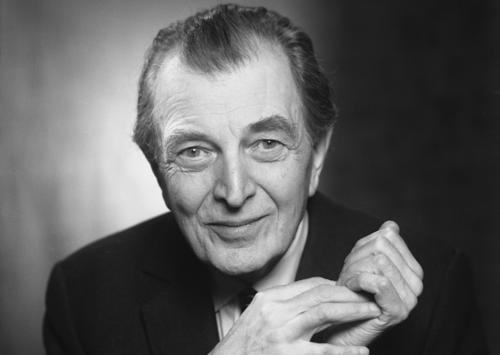
Alexander Tcherepnin discusses his career
Nov. 10, 1959 Russian composer Alexander Tcherepnin discusses his early upbringing, training, and composing bagatelles in Saint Petersburg, as well as the influence of his composer father, Benois family relatives, Russian/Asian/European cultural influence, electronic music.
-
-
-
Actress Verna Bloom discusses being arrested in Chicago ; part 2. Also included are conversations with a lady behind a cigar counter and a cab driver
1968 Content Warning: This conversation includes racially and/or culturally derogatory language and/or negative depictions of Black and Indigenous people of color, women, and LGBTQI+ individuals. Rather than remove this content, we present it in the context of twentieth-century social history to acknowledge and learn from its impact and to inspire awareness and discussion. Verna Bloom continues to talk about how scared she was when being arrested. Bloom said she was hand-cuffed for an hour. One of Bloom's friends was able to smooth things over with the police and she was finally released.
-
Actress Verna Bloom discusses being arrested in Chicago ; part 1
1968 The day after being arrested in Chicago, Verna Bloom talks about the outrage and humiliation she felt. In great detail, she describes what led up to her arrest. Bloom contends she was doing nothing other than enjoying the nice weather when a police officer arrested her.
-
Abram Chayes discusses the mining of the Nicaraguan Harbor by U.S. Naval forces
May. 16, 1985 Abram Chayes, Professor of International Law at Harvard University, discusses the United States’ foreign relations with Nicaragua and the International Court of Justice, also known as the World Court.
-
Abe Peck discusses his book “Uncovering the Sixties: The Life and Times of the Underground Press”
Jun. 10, 1985 Editor and writer Abe Peck discusses and reads from his book “Uncovering the Sixties: The Life and Times of the Underground Press.” Peck discusses the social and political forces, such as the lack of questioning authority forces seen during this time, that drove the alternative press to formation. This program includes audio clips of Studs interviewing attendees of a Vietnam War protest in Chicago. Studs also includes a clip of British journalist James Cameron discussing the 1968 Chicago Democratic Convention. Studs plays "The Times They Are A-Changin'" - Bob Dylan (1964).