Listen to New Voices on Studs Terkel our partnership with 826CHI-here! Read the Story


Showing 721 - 735 of 777 results
-
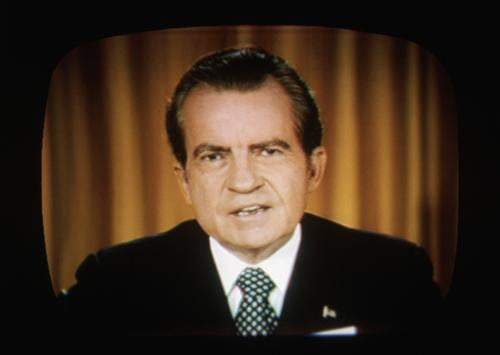
Carl Bernstein and Bob Woodward discuss the book "All the President's Men"
Jun. 21, 1974 Washington Post journalists discuss their book "All the President's Men" about breaking the Watergate scandal.
-

Carl and Hallie Foster discuss living their lives in Newburgh, Indiana
1970 Carl and Hallie Foster talk about the good and the bad of Newburgh, Indiana. Having been a welder for most of his life, Carl Foster, reflects on the time he got sick while on the job. He had gotten cancer and had to be fed intravenously for six months. While he was out sick, the company did not compensate him. When asked about his hobby of growing banana trees, a true calm and passion takes over his personality, as noticed by Studs Terkel.
-
Candace Falk discusses her book "Love, Anarchy, Emma Goldman: A Biography"
Apr. 23, 1985 Candace Falk discusses Emma Goldman and reads from her biographical novel on Goldman entitled "Love, Anarchy, Emma Goldman: A Biography." This interview gives a summary of Goldman's life and accomplishments as an anarchist political activist, particular emphasis is placed on Goldman's efforts, writings, and speeches relating to the free love movement. A reading from Emma Goldman's "Marriage and Love" is also included. Studs plays "The Rebel Girl" - Joe Glazer (1954).
-
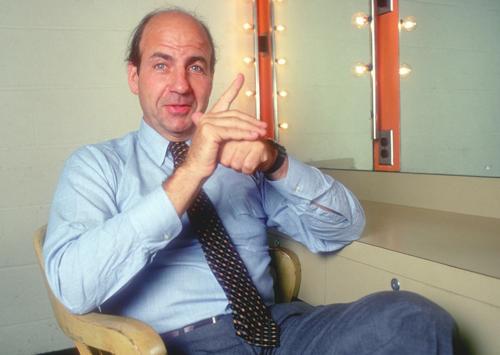
Calvin Trillin discusses his book “Enough’s Enough (and Other Rules of Life)”
Nov. 9, 1990 Author, humorist, and poet Calvin Trillin discusses and reads from his book “Enough’s Enough (and Other Rules of Life),” a collection of humorous essays about everyday topics, from social to political. Studs and Trillin discuss why we get cold fronts from Canada, not Greenland; and how to spot a moderate out in public. Studs plays "Out of My Road, Mr. Toad" - Bud Freeman (1970).
-
C.D.B. Bryan talks with Studs Terkel
Jul. 14, 1976 C.D.B. Bryan discusses his book "Friendly Fire" and the Vietnam War. Bryan discusses the true story of Michael Mullen who was killed by friendly fire in Vietnam and his family.
-
Blanche Wiesen Cook discusses her book, "The Declassified Eisenhower: A Divided Legacy of Peace and Political Warfare"
Aug. 6, 1981 Blanche Wiesen Cook, historian, professor, and author discusses her book, "The Declassified Eisenhower," and explains Eisenhower's peace and war beliefs. She describes his beliefs at the end of World War II and his relationships with fellow generals and leaders.
-
Bill Adelman, Paul Avrich, Carolyn Ashbaugh, and Bill Neebe discuss the Haymarket Square Riot
May. 2, 1986 Commemorating the centennial of the Haymarket Square Riot, or Haymarket Affair, are authors and historians Bill Adelman, Paul Avrich, Carolyn Ashbaugh, and the grandson of Haymarket defendant Oscar Neebe, Bill Neebe. The interveiwees create a timeline of the events leading up to the Haymarket Riot including the German immigrants living situations, unions and strikes, police brutality and corruption. The group also lays out the events from May 1st to May 5th and then the following corrupt trials.
-
Big Bill Broonzy discusses the blues
Sep. 13, 1955 Big Bill Broonzy discusses the blues with Studs. Big Bill talks about getting ready for a European tour, his young life, and his life as a musician. The following performances have been removed for copyright reasons: "Ride Alberta, ride," "Going Down the road feeling bad," "House rent stomp," "The glory of love," "Plow hand," "I feel so good," and "Make my getaway."
-
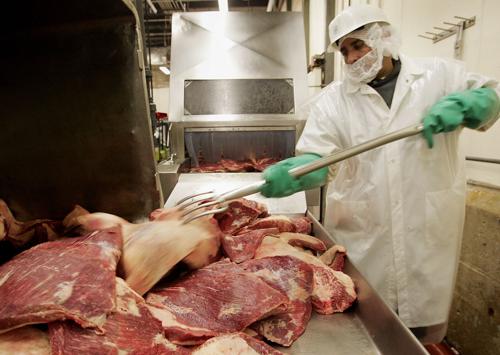
Barbara Kopple discusses her documentary "American Dream"
Mar. 20, 1992 Academy Award winning documentarian Barbara Kopple talks with Studs about her documentary "American Dream" and the battle fought and lost by union workers in Austin, Minnesota during the mid-80s. They set the backdrop in the small, tight-knit community that Hormel Foods had such a profound impact on, how the UFCW international union declined to support the local union, the gripping dynamics between family members who crossed picket lines, and the healing that occurred when the film was screened in the town several years later.
-
Barbara Kingsolver discusses her book "Holding the Line: Women in the Great Arizona Mine Strike of 1983"
Sep. 17, 1990 Since no men were allowed to picket against the Phelps Dodge Corp., Mexican American women showed up and according to Kingsolver’s book, “Holding the Line,” the picket lines were a brand new experience for the women. Some of the women had to get their husbands’ permission to picket. The group of women found their lives transformed not only with their cause but with new bonds of friendship from the other women.
-
Author Ronald Steel discusses his book "Walter Lippmann and the American Century."
Nov. 1981 Ronald Steel goes in-depth about his biography of journalist Walter Lippman.
-
Auburn University student discusses the Civil Rights march on campus and his involvement
1965 Studs interviews a white student on the Auburn University campus after a Civil Rights march. The student explains that he is there to be sure a white face is present and to stand up for democracy. He describes the event and speaks to his family background. The student expresses the experience of black students on the integrated campus and how it has changed. (Tape 6, part 2)
-
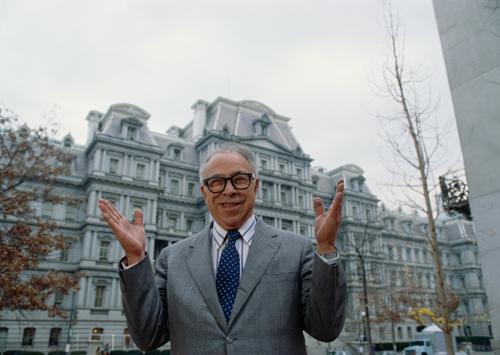
Art Buchwald reads from and discusses his book "Laid Back in Washington"
Feb. 1982 Discussing the book "Layed back in Washington" and interviewing Art Buchwald.
-
Arnold A. Hutschnecker discusses his book "The Drive For Power"
Jan. 8, 1975 Arnold A. Hutschnecker, a doctor with specialization in psychiatry, talks about his book, "The Drive For Power." He explores mental illness and its negative connotation. He explores how people who look for power tend to need mental help, but that the negative stigma around it tends to make them shy away, which leads to national aggravation and war. He also recalls his meetings with Richard Nixon from before he was president and how continued help may have changed the Vietnam War.
-
Arna Bontemps and Jack Conroy discuss their book "Any Place But Here"
1960 Discussing the book "Any Place But Here" and interviewing the authors Arna Bontemps and Jack Conroy.Content Warning: This conversation has the presence of outdated, biased, or offensive language. Rather than remove this content, we present it in the context of twentieth-century social history to acknowledge and learn from its impact and to inspire awareness and discussion.