Listen to New Voices on Studs Terkel our partnership with 826CHI-here! Read the Story


Showing 1576 - 1590 of 1649 results
-

Allen Ginsberg discusses his book "Collected Poems, 1947-1980"
Jan. 29, 1985 A member of the Beat Generation, activist, and author Allen Ginsberg discusses his latest work and its reflection on his life. The piece covers works such as the infamous poem Howl to the sentimental piece called Aunt Rose.
-
Allen Ginsberg and William S. Burroughs talk about their writing
Mar. 11, 1975 Writers Allen Ginsberg and William S. Burroughs discuss life and their writing; passages from their writing are read by the authors and clip is played of interview with Allen Ginsberg, Gregory Corso, and Peter Orlovsky.
-

Allen Ginsberg and Philip Glass talk about their collaborations
Apr. 16, 1990 Discussing the opera "Hydrogen Jukebox," with poet Allen Ginsberg and composer Philip Glass.
-
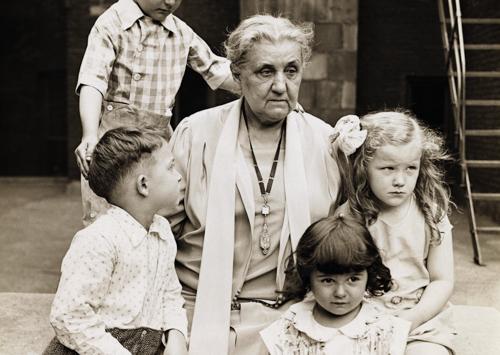
Allen Davis discusses Jane Addams and his current book
Dec. 14, 1973 Allen Davis talks with Studs about his recently published biography "American Heroine: The Life and Legend of Jane Addams" A Nobel Peace Prize winner, Jane Addams was one of the founders of Hull House, a social reformer, a suffragist and pacifist. Allen Davis discusses her life. Interview begins with an excerpt of Jessie Binford talking about Jane Addams and Hull House Chicago (1863362-3-1).
-
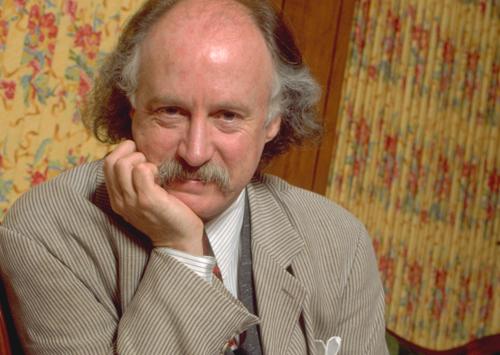
Allan Gurganus in conversation with Studs Terkel
Feb. 7, 1991 Discussing the books "Oldest Living Confederate Widow Tells All" and "White People" (both published by Knopf) with author Allan Gurganus.
-
Alix Kates Shulman discusses her book "Memoirs of an Ex-Prom Queen"
Jul. 28, 1972 Sasha, the main character in Alix Kates Shulman's book, "Memoirs of an Ex-Prom Queen" is obsessed and worried about her good looks. Sasha is all of 24 now, and she was told that by the time she's 30, her good looks will fade. Once a new queen is named, Sasha's mother tells her, you become a has been. The prom queen theme of the book, says Shulman, is to compete for the man and to be #1. Similar to the Miss America contest, women are parading before the men, parading before the judges for their attention.
-
Alfred Eisenstaedt in conversation with Studs Terkel
Jun. 1, 1990 Discussing the book "Eisenstaedt: Remembrances," with the author Alfred Eisenstaedt. A renowned photojournalist, Eisenstaedt was one of the first staff photographers for LIFE magazine when it debuted in 1936.
-
Alfred Alvarez discusses his book "The Savage God: A Study of Suicide"
May. 5, 1972 Alfred Alvarez, poet and author, talks about his new book, "The Savage God," and how depression and suicide affects people. He talks about his past experience with his friend Sylvia Plath and the end of her life. The two men also discuss the history of suicide including the Greeks, Judas, Middle Ages, and the Renaissance. Alvarez also talks about famous artists who have committed suicide and why the 20th century may have caused so many suicides. Alvarez reads the opening passage and epilogue of his book.
-
-
Alexander Eliot discusses his book "Sight and Insight"
Mar. 14, 1959 In his book, "Sight and Insight," Alexander Eliot talks about having spent time in Spain and reflecting upon the masterpieces of art that he has studied and researched throughout his life. Eliot spoke of people being able to use their imagination and their mind's eye to fill in a piece of artwork if something were missing from it. Eliot explained, with one's insight, comes sight.
-
Alexander Cockburn discusses his book “The Fate of the Forest: Developers, Destroyers, and Defenders of the Amazon”
Nov. 20, 1989 Author and journalist Alexander Cockburn discusses his book “The Fate of the Forest: Developers, Destroyers, and Defenders of the Amazon.” Cockburn discusses the detrimental effects of deforestation not only on the environment, but for the indigenous groups, such as the Kayapo people, as well. Studs plays "Cancão Da Terra (Song of the Earth)" - Zelia Barbosa (1968).
-
Albert Finney, Ronald Harwood in conversation with Studs Terkel
Mar. 7, 1991 Discussing the play "Another Time," with playwright Ronald Harwood and actor Albert Finney.
-
Alan Watts discusses Zen Buddhism
Dec. 1, 1960 Zen Buddhism, explains Watts, offers a change in one's basic consciousness and of one's basic existence. Zen is a way of liberation from the illusion of oneself. It's not just about the inside of one's self but it's about the outside, too. Zen is not something exotic. It needn't be imported from Japan, said Watts.
-
Alan Watts discusses and reads from his book "In My Own Way"
1970 In Alan Watts' autobiography, "In My Own Way," he explains that the song "Onward Christian Soldier" is militant, and of a militant religion, whereas Zen Buddhism is not militant at all. Watts also says that most of the troubles that go in the world are created by people that take life too seriously.
-
Alan Schneider discusses Samuel Beckett and Edward Albee
Stage director Alan Schneider talks about his work with playwrights, Samuel Beckett and Edward Albee. Plays include "Waiting for Godot," "A Delicate Balance," and "Whose Afraid of Virginia Woolf?"