Listen to New Voices on Studs Terkel our partnership with 826CHI-here! Read the Story


Showing 1516 - 1530 of 1649 results
-

August Derleth discusses the books he writes ; part 1
To date, August Derleth said he's written 135 books. A good number of his books are of Sauk City, Wisconsin, the German town where is was born and raised. Derleth explained writing books on poetry are not big money makers and for that reason, he then turns to writing horror stories or mystery novels.
-
August Derleth discusses his writing influences ; part 2 | In the 2nd interview, Iris Ford discusses and demonstrates playing the sleigh bells
In conclusion, August Derleth, spoke of his biggest influences, Henry David Thoreau and Ralph Waldo Emerson. Derleth believed that one day there would be a renaissance of great literary authors. With regards to playing the sleigh bells in churches, Iris Ford says its like blending something ridiculous to the sublime. Ford, a self-taught sleigh bell player, plays for all types of religious orders. Because playing the music is for God, says Ford, it needs to be exceptional.
-
Athol Fugard discusses his play "Master Harold…and the Boys"
May. 6, 1983 Discussing the play "'Master Harold'--and the Boys," with playwright Athol Fugard.
-
Asa Baber reads from and discusses his book "Land of a Million Elephants"
Jun. 8, 1970 Having spent time as a Marine in southeast Asia and his military experience became material for Asa Baber's first book, "Land of a Million Elephants". Baber also talks about how he formulated his book. "Writing is music. Writing is jazz," said Baber. He didn't believe writing was about concepts and structure.
-
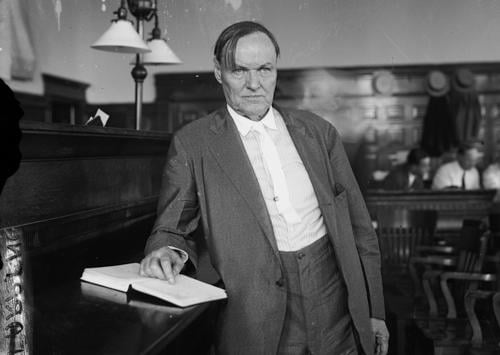
Arthur Weinberg discuess his biography of Clarence Darrow
Dec. 8, 1980 Terkel interviews author Arthur Weinberg. His latest book is called: "Clarence Darrow: A Sentimental Rebel".
-
Arthur Miller discusses working in China
Jan. 22, 1984 In 1978, Arthur Miller saw a play in China and was asked to offer his expertise critique. A few years later, Arthur Miller was asked to direct "Death of a Salesman" in Beijing. Complimentary tickets were given away to the audience for a preview performance. Arthur was appalled at the audiences' behavior as they talked throughout the entire presentation. Miller's main concern was that his play would be seen as a political statement instead of a work of art. However, opening night arrived and his play was very well received.
-
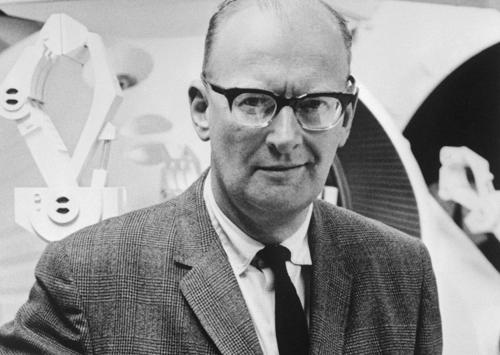
Arthur Charles Clarke discusses science fiction
Jan. 27, 1959 Arthur Charles Clarke discusses science fiction and his books "Childhood's End", "Prelude to Space", and "the Deep Range".
-
Art Shay discusses his book, "Nelson Algren's Chicago," and his friendship with Algren
Dec. 20, 1988 Studs interview with Art Shay opens and closes with a slow blues piece. Shay discusses his picture book, "Nelson Algren's Chicago." He and Studs discuss the people and events in a number of pictures from the book. Studs plays a recording of Algren reading from one of his novels. Studs quotes critic, Rick Kogan of the Tribune.
-
Art Shay discusses his book, "Nelson Algren's Chicago," and his friendship with Algren
Dec. 20, 1988 Studs interview with Art Shay opens and closes with a slow blues piece. Shay discusses his picture book, "Nelson Algren's Chicago." He and Studs discuss the people and events in a number of pictures from the book. Studs plays a recording of Algren reading from one of his novels. Studs quotes critic, Rick Kogan of the Tribune.
-
-

Arnold Wesker, english writer and playwright discusses his life and work.
1962 Arnold Wesker, English playwright and writer in several genres discusses scenes from the play "Roots". Mr Wesker further discusses his plays and the current cast traveling around England performing several of his plays. The interview tape ends and Studs recalls the remainder of the interview alone as a postscript.
-

Arnold Wesker talks with Studs Terkel ; part 2
1962 Terkel Talks with known English Dramatist Sir Arnold Wesker (part 2) about the economy of England. The talk begins with the subject of apprentices and when students began their apprenticeship (usually at the age of 15). This is a two part interview
-

Arnold Wesker talks with Studs Terkel ; part 1
1962 Terkel Talks with known English Dramatist Sir Arnold Wesker (part 1) about the economy of England. The talk begins with the subject of apprenticeship. This is a two part interview.
-
Arnold Wesker and Doris Lessing discuss the poor, literature, and theater among other topics in England ; part 1
Sep. 1, 1970 Arnold Wesker and Doris Lessing discuss the poor, theater, and literature in England. They also discuss art, life, values, race relations, and what people from other countries have in common . The interview takes place in England.
-
Arnold Rampersad reads from and discusses his book "Jackie Robinson"
Oct. 22, 1997 According to Arnold Rampersad’s book, “Jackie Robinson: A Biography”, Jackie Robinson’s claim to fame was not soley being the first African American baseball player to play in the MLB, but Robinson was also a symbol of race relations and civil justice. Rampersad’s book also includes various stories of Robinson’s background & family life. Robinson was court martialed for not sitting in the back of a bus. Sadly, Robinson’s son, Jackie, Jr. could never handle being the son of Jackie Robinson and he turned to drugs.